

A Line in the Sand
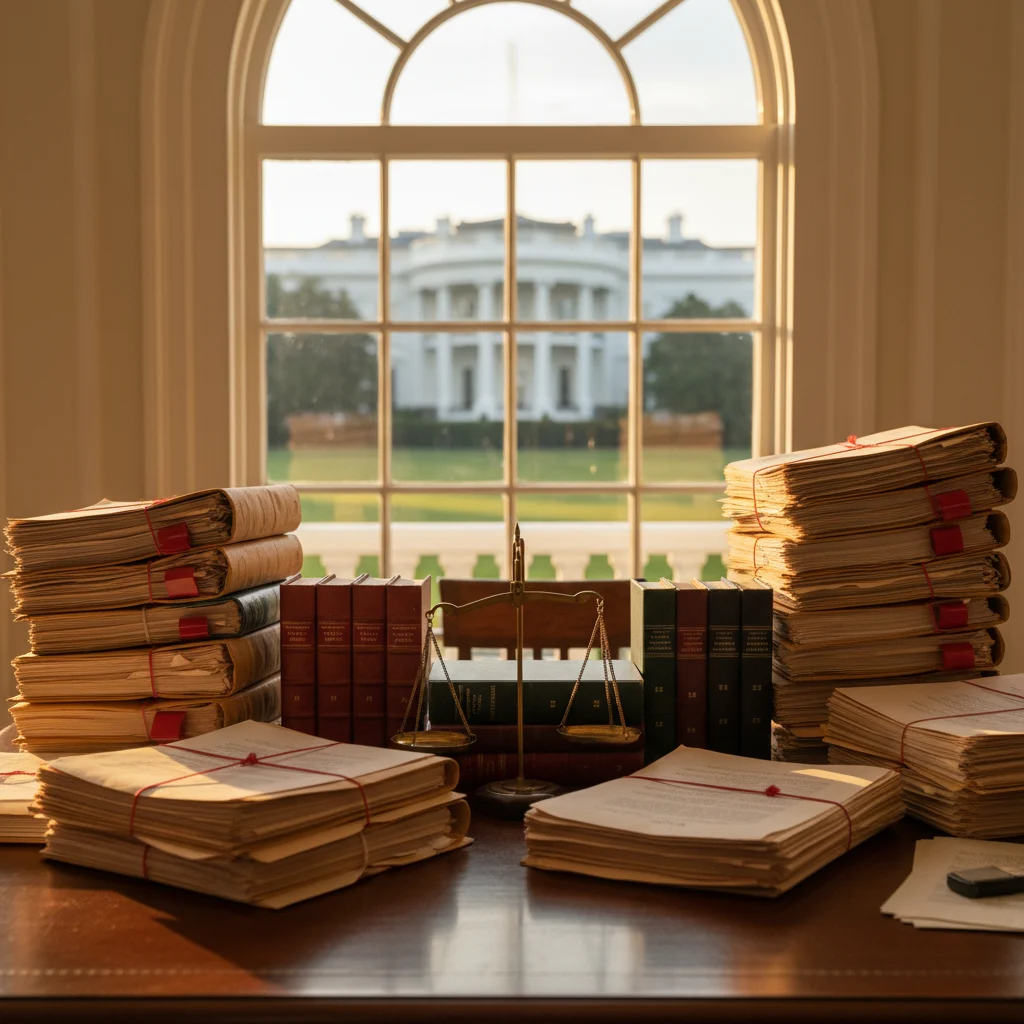
The constitutional showdown over the 2026 banking liquidity crisis just took a sharp turn. By invoking executive privilege to block two key Treasury Department officials from testifying on Capitol Hill, the White House has ignited a fierce debate among legal scholars over the limits of presidential secrecy.
Congress is furious. Legal experts are deeply divided. The standoff threatens to drag on for months, dragging the nation’s highest courts into a messy separation-of-powers fight.
The decision, announced in a letter to the House Financial Services Committee, prevents Deputy Treasury Secretary Sarah Jenkins and Undersecretary for Domestic Finance Robert Vance from taking the stand. Lawmakers wanted to grill them about the tense, behind-closed-doors decisions made during the panic of October 2026, when several midsize lenders teetered on the brink of collapse.
Instead, they got a blank wall.
The Chilling Effect Argument
“The President’s ability to receive candid advice during an economic emergency is paramount,” White House Counsel Neil Solis wrote in the letter. He argued that forcing these officials to testify would have a chilling effect on future crisis management, making advisers hesitant to offer bold solutions during high-stress panics.

But is that a valid legal argument? Constitutional scholars say the administration is pushing the limits of executive power. Unlike the National Security Council, the Treasury Department is a creature of statute, established by Congress to manage the nation’s finances, which makes it highly accountable to legislative oversight.
“This is a massive stretch,” says Jonathan Shaub, a constitutional law professor at the University of Kentucky and a former Justice Department attorney. Shaub points out that executive privilege was originally designed to protect the president’s personal deliberations, not the day-to-day operations of administrative agencies. “If the White House can shield any Treasury official who talked to the President during a crisis, congressional oversight of the economy effectively ceases to exist.”
The Need for Confidentiality
Not everyone agrees. Some legal experts believe the administration has a solid case, especially given the severity of the 2026 panic.
Mark Rozell, dean of the Schar School of Policy and Government at George Mason University, argues that the high-stakes nature of the liquidity crunch justifies the move. “During a financial panic, decisions must be made in minutes, not days,” Rozell says. “If officials are constantly looking over their shoulders, wondering how their words will play in a future congressional hearing, the decision-making process breaks down completely. The President needs a zone of privacy to operate.”
The debate centers on two distinct types of executive privilege:
- The presidential communications privilege: This is a robust but narrow protection. It only covers communications directly involving the President and has a high legal threshold to overcome.
- The deliberative process privilege: This is a much broader shield covering internal agency debates. However, it is much easier for Congress to bypass if lawmakers can prove a compelling public interest.
A Looming Court Battle
The public interest here is undeniable. The 2026 crisis shook the financial sector to its core. Over a frantic forty-eight hours in mid-October, the Federal Reserve and the Treasury deployed billions of dollars in emergency loans to stabilize the system. Critics argue that the intervention favored a handful of Wall Street giants while leaving regional institutions to scramble, a claim the administration strongly denies.
Representative Arthur Pendelton, the Georgia Republican chairing the investigating committee, has already threatened to hold the officials in contempt of Congress. “This isn’t about protecting presidential advice,” Pendelton said at a press conference. “This is a cover-up of a bailout that cost everyday taxpayers.”
Heidi Kitrosser, a constitutional law professor at Northwestern University, suggests the dispute is headed straight for the federal courts. “We are looking at a classic separation-of-powers clash,” Kitrosser says. “The courts will have to weigh the House’s legitimate need for information against the executive branch’s need for confidentiality.”
Historically, courts have tried to avoid these fights, urging the two branches to reach a compromise. But with political polarization at an all-time high, a quiet deal seems highly unlikely. If the case does end up before a federal judge, the administration might face an uphill battle. In previous rulings, judges have consistently held that executive privilege cannot be used to hide administrative mistakes or shield political decisions from scrutiny.
For now, the standoff continues. The financial markets, already jittery after the volatile events of 2026, are watching closely. Any prolonged legal battle could fuel further economic uncertainty, leaving the public to wonder what really happened behind closed doors during the height of the crisis.
CLICK HEARE TO GET FREE $100 IN AMAZON COMPANY
