


The global freelance market is undergoing a massive shift. For years, young professionals in Bangladesh built solid careers by handling basic outsourcing tasks. They coded websites, designed logos, and managed social media pages. Then, generative artificial intelligence arrived. Almost overnight, the rules of the game changed. Clients stopped looking for basic execution. They wanted speed, efficiency, and scale.
Instead of panicking, the country’s top training institutes decided to rebuild their foundations. Shikhbe Shobai and Creative IT Institute, two of the most prominent IT training centers in Bangladesh, have officially rolled out their updated 2026 curriculums. The core theme? Complete integration of artificial intelligence across every single course track.
The response from the local freelance community has been overwhelmingly positive. Reviews and ratings from working professionals suggest that these updated programs are currently the best educational resources in the country. They don’t just teach students how to code or design; they teach them how to collaborate with AI to do those jobs five times faster.
The Reality of the Modern Freelance Market
To understand why these new programs are receiving such high praise, you have to look at the current job market. Freelancers on platforms like Upwork and Fiverr are facing intense competition. Simple services are rapidly becoming automated.
Sayed Rahman, a veteran UI/UX designer based in Dhaka, experienced this shift firsthand. “A few years ago, a client would give me two weeks to design a mobile app prototype,” Rahman says. “Now, they expect to see initial concepts by tomorrow morning. If you don’t know how to use AI tools to generate, test, and iterate your ideas quickly, you simply cannot compete anymore.”
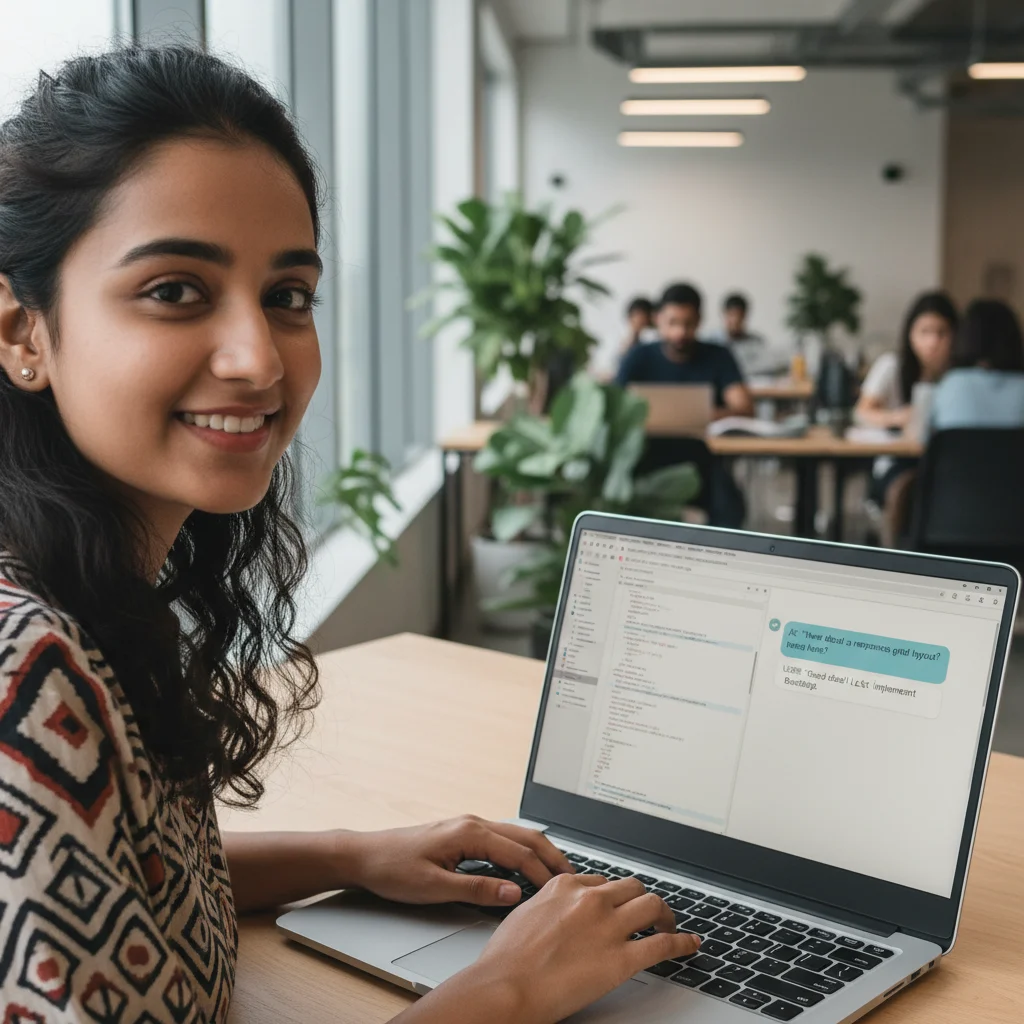
This is where the new curriculums come in. Rather than treating AI as an enemy or an afterthought, both institutions have woven intelligent tools into the fabric of their training programs. Students learn the foundational skills of their craft alongside the modern tools that accelerate production.
Inside Shikhbe Shobai’s AI-First Approach
Shikhbe Shobai has always focused on community-driven learning and practical freelancing skills. For their 2026 update, they have restructured their most popular tracks, including graphic design, web development, and digital marketing.
Their new curriculum introduces specialized modules on prompt engineering tailored for specific creative fields. Graphic design students don’t just learn Adobe Illustrator; they learn how to use Midjourney and Adobe Firefly to build complex visual assets, mood boards, and conceptual layouts in minutes. Web development students are introduced to GitHub Copilot and ChatGPT-assisted debugging early in their training.
“We realized that teaching traditional methods alone is no longer enough,” says Monir Hosen, co-founder of Shikhbe Shobai. “If our students spend three months learning how to write basic code that an AI can generate in three seconds, we are failing them. We teach them the theory so they understand how the code works, but we also teach them how to use AI to build complex applications at record speed.”
This practical approach is paying off. Freelancers who have gone through the pilot runs of these courses report a major boost in confidence. They are no longer afraid of losing their jobs to automation. Instead, they are using these tools to take on more clients and increase their monthly earnings.
How Creative IT is Redefining Tech Education
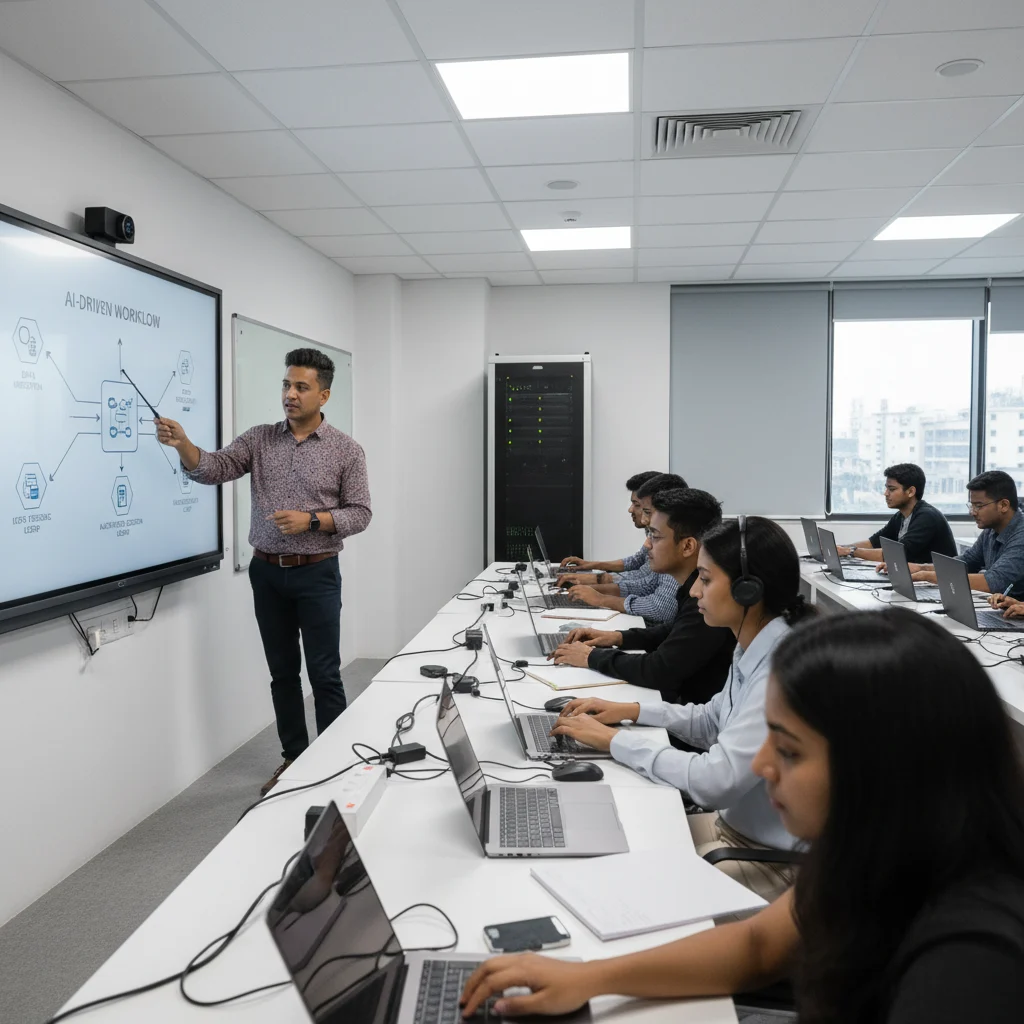
A few miles away, Creative IT Institute is taking a similarly aggressive approach to modernization. Known for its robust infrastructure and hands-on lab environments, the institute has invested heavily in updating its training labs to support advanced machine learning workflows.
Their 2026 academic catalog features a strong emphasis on data-driven design and automated marketing systems. For instance, their digital marketing course now includes extensive training on AI-driven content generation, predictive analytics, and automated ad campaign management.
“The industry demands versatile professionals,” says a senior representative from Creative IT’s academic board. “Our new curriculum is designed to turn our students into project managers who can oversee AI agents. We want them to understand the underlying technology, but more importantly, we want them to master the orchestration of these new digital tools.”
Creative IT has also introduced a unique mentoring program. Students work on real-world projects where they must use AI tools to meet tight deadlines, mimicking the high-pressure environment of top-tier international agency work.
Why Local Freelancers are Rating These Programs as the Best
What makes these two institutions stand out to local freelancers is their focus on real-world survival skills. Many online courses offer theoretical knowledge, but they often fail to prepare students for the practical realities of client communication and project delivery times.

A recent survey among independent digital service providers in Bangladesh revealed that graduates from these updated programs are securing jobs faster than those from traditional academic backgrounds. The ability to demonstrate a modern, AI-integrated portfolio is a massive competitive advantage.
- Increased Efficiency: Graduates report being able to complete projects up to 50% faster by using the workflows taught in these classes.
- Higher Earning Potential: By offering faster turnaround times, freelancers can manage multiple clients simultaneously, boosting their monthly revenue.
- Future-Proof Skills: Learning how to work alongside AI ensures that these professionals remain relevant even as technology continues to evolve.
Local community forums are filled with discussions comparing various training centers, and the consensus is clear. Shikhbe Shobai and Creative IT have set a new benchmark. Their forward-thinking approach is helping Bangladesh maintain its position as a global outsourcing powerhouse.
A Broader Impact on the Economy
This educational evolution is about more than just individual success stories. It has significant implications for the broader economy of Bangladesh. The country relies heavily on remittance inflows, and the technology sector is a vital component of that income stream.
As the government continues to push its vision for a highly skilled, digital-first economy, the private sector must step up to provide the necessary training. By upgrading their curriculums to match global standards, these institutes are helping to ensure that Bangladeshi talent remains highly sought after on the international stage.
The era of simple, low-cost outsourcing is coming to an end. In its place, a new market is emerging—one that values strategic thinking, speed, and technological fluency. Thanks to the proactive updates from local training pioneers, the next generation of Bangladeshi freelancers is more than ready to meet the challenge.

Omer Faruk
Omar Faruk is a digital content creator and online publisher passionate about sharing useful information, trending news, and practical guides for internet users. He focuses on creating engaging and easy-to-understand content related to global news, entertainment, technology, online earning, and lifestyle topics.
With a strong interest in digital media and SEO-friendly content writing, Omar Faruk continuously works to build informative platforms that help readers stay updated and make better online decisions.
He believes in delivering valuable, accurate, and user-friendly content that serves a global audience and improves everyday digital experiences.