


The Race to Build a Digital Workforce by 2026
Walk into any tech hub in Dhaka, and the conversation inevitably turns to freelancing. Bangladesh is already home to one of the largest online workforces in the world. Now, the government is trying to push that momentum into overdrive. Under the banner of the 2026 Smart Bangladesh Initiative, the Information and Communication Technology (ICT) Division has launched a massive wave of free freelancing and IT training courses. The goal is simple yet staggering: turn hundreds of thousands of unemployed youths into high-earning digital professionals.
But this massive state-sponsored push has set up an inevitable clash. For years, premium private IT institutes have dominated the training sector. Names like Creative IT, CodersTrust, and Shikhbe Shobai have built profitable empires by promising top-tier education, direct marketplace mentoring, and job placements. Now that the government is offering similar training for free, aspiring freelancers are asking a critical question: should they spend months waiting for a state-funded slot, or shell out tens of thousands of Taka for a private academy?
Behind the State-Funded Engine: What is the ICT Division Offering?
The government’s digital training strategy is not a single program, but a web of interconnected projects. The most prominent among these are the Learning and Earning Development Project (LEDP), the Her Power project aimed at female empowerment, and the Enhancing Digital Government and Economy (EDGE) project. These programs target both rural and urban youth, teaching everything from basic graphics design and digital marketing to advanced software development and data science.
The biggest draw of these programs is, of course, the cost. They are entirely free. In fact, many of these initiatives actually pay the students. Participants in some projects receive a daily attendance allowance or a stipend upon completing the course. For a young person in a remote upazila, this eliminates the financial barrier to entry entirely.

The scale of these projects is unmatched. While a private institute might train a few thousand students a year, the ICT Division targets tens of thousands simultaneously across all 64 districts. The government has partnered with local high schools, university labs, and district offices to create physical training centers, ensuring that even those without a personal computer can learn the ropes.
The Private IT Powerhouses: The Price of Premium Support
On the other side of the fence stand the private IT academies. These institutes are businesses, and their tuition fees reflect that. A standard three-to-six-month course in web development, UI/UX design, or digital marketing can cost anywhere from 15,000 to 50,000 BDT. In a country where the average entry-level salary is modest, this is a major investment.
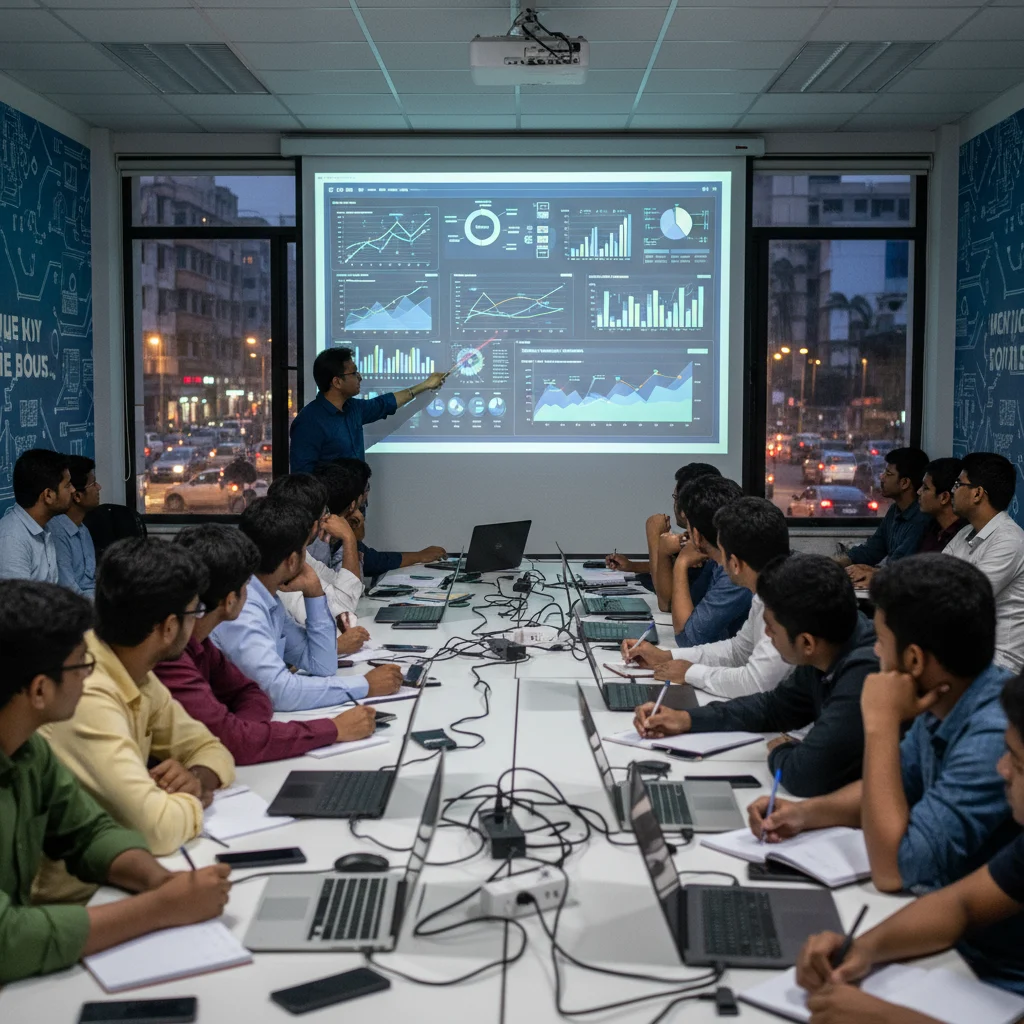
What do students get for this premium? The answer lies in infrastructure and personalized attention. Walk into a top-tier private institute in Dhanmondi or Karwan Bazar, and you will find state-of-the-art computer labs, high-speed fiber-optic internet, backup generators to beat load-shedding, and air-conditioned classrooms.
More importantly, private institutes sell a community. They offer lifetime student support, active alumni networks, and dedicated job placement cells. If a student struggles to get their first order on Fiverr or Upwork three months after graduating, they can walk back into the institute and get one-on-one help from a senior mentor. That level of ongoing support is difficult for a state-run program to replicate.
Curriculum and Speed: Keeping Up with the Tech Industry
Technology moves at a breakneck pace. An industry standard today can become completely obsolete in twelve months. This is where the structural differences between government bureaucracies and private enterprises become glaringly obvious.
Private institutes can pivot almost overnight. If a new AI tool like ChatGPT or Midjourney changes how digital marketing or graphic design is done, private mentors can integrate these tools into their syllabus next week. They are incentivized to keep their curricula cutting-edge because their reputation depends directly on their graduates getting hired in a competitive global market.
The ICT Division, despite its best intentions, operates within a bureaucratic framework. Curriculum changes often require official approvals, tender processes for training partners, and standardized evaluations. This means a government syllabus might still focus heavily on traditional methods while the global market has moved on to AI-assisted workflows. However, the government has recently made efforts to address this by outsourcing training execution to top private tech companies and consortia, bridging the quality gap significantly.
The Support Gap: The Struggle of Post-Course Handholding
Learning how to code or design is only half the battle. The real challenge of freelancing is finding clients, writing winning proposals, and managing accounts on platforms like Upwork, Fiverr, and Freelancer.com. This is where many beginners fail.

Under government projects, trainers are often contracted for a specific number of hours. Once the project cycle ends and the final exams are graded, the trainers pack up and move to the next batch. While some dedicated trainers offer informal help via Facebook groups, there is no institutionalized safety net for struggling graduates.
Private institutes, conversely, have built their business models around success stories. They need successful freelancers to market their next batches. As a result, they invest heavily in post-course support. Some offer co-working spaces where graduates can sit side-by-side with experienced mentors while bidding for jobs. This ecosystem of real-time troubleshooting is a massive advantage for private academies.
Evaluating the Real Cost of Free
While the zero-price tag of the ICT Division’s courses is highly attractive, it does come with hidden costs. The selection process for government courses can be highly competitive and sometimes bureaucratic. Applicants must go through written exams and viva sessions, and the wait times can stretch for months. For an ambitious youth eager to start earning immediately, this waiting period is a significant opportunity cost.
Furthermore, because the courses are free, dropout rates can be high. Students who have no financial skin in the game are more likely to lose motivation and quit halfway through, which can sometimes disrupt the classroom dynamic for those who are genuinely serious about learning.
The Verdict: A Two-Tiered Ecosystem
The ICT Division’s 2026 Smart Bangladesh Initiative is not a replacement for private IT education; rather, it serves as a massive funnel. The government’s free courses are democratization tools. They reach the rural youth, the underprivileged, and those who cannot afford to take a financial risk. They spark interest, teach the basics, and provide the initial certificates that build confidence.
For those who have the financial means and require intensive, personalized career transition support, private IT institutes remain the faster, more robust route to market readiness. The ideal path for many might actually be a hybrid one: starting with a free government course to build foundational skills, and then investing in specialized private training or advanced mentorship to break into high-paying global niches.
Ultimately, both sectors are essential if Bangladesh is to meet its ambitious 2026 digital milestones. The government provides the scale, while the private sector provides the polish.

Omer Faruk
Omar Faruk is a digital content creator and online publisher passionate about sharing useful information, trending news, and practical guides for internet users. He focuses on creating engaging and easy-to-understand content related to global news, entertainment, technology, online earning, and lifestyle topics.
With a strong interest in digital media and SEO-friendly content writing, Omar Faruk continuously works to build informative platforms that help readers stay updated and make better online decisions.
He believes in delivering valuable, accurate, and user-friendly content that serves a global audience and improves everyday digital experiences.