
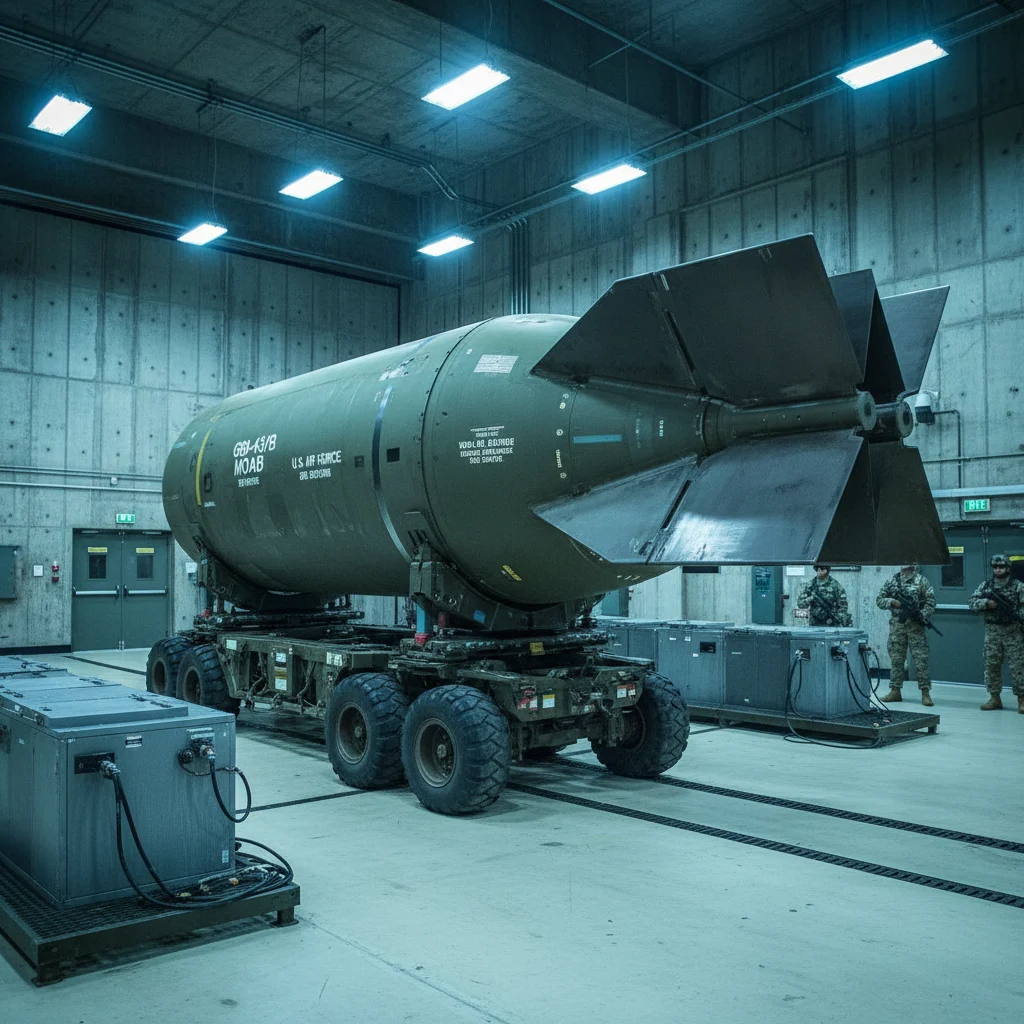
The United States Air Force is quietly re-evaluating its inventory of the GBU-43/B Massive Ordnance Air Blast, famously dubbed the ‘Mother of All Bombs.’ According to defense officials and strategic planners speaking in late 2026, the service is shifting its focus away from these ultra-heavy gravity weapons. The reason is simple: the airspace of tomorrow is too dangerous. Instead, the military is betting heavily on modular, palletized launch systems that let cargo planes fire precision cruise missiles from hundreds of miles away.
It is a stark pivot. For two decades, American air power reigned supreme over relatively uncontested skies. In Iraq and Afghanistan, slow-moving transports could lumber over targets without fear of surface-to-air missiles. That environment allowed the development and deployment of the MOAB—a 21,600-pound monster designed to clear tunnels and devastate surface networks. It was used only once in combat, dropped from an MC-130 Combat Talon II onto an Islamic State cave complex in Afghanistan in April 2017.
The Vulnerability of Gravity Warfare
But the strategic map has changed.
Today, Pentagon planners are obsessed with the tyranny of distance in the Indo-Pacific. A conflict in this theater would feature dense, sophisticated air defenses. Flying a slow, unarmed propeller plane deep into contested airspace to drop a gravity bomb is a non-starter. It would be a suicide mission.
‘The era of the lumbering giant dropping a single, massive bomb over a target is largely behind us when we talk about peer adversaries,’ says Marcus Vance, a senior defense analyst specializing in aerospace doctrine. ‘In a contested environment, survivability is everything. If you cannot get close, you have to shoot from far away.’
The Rise of Palletized Munitions
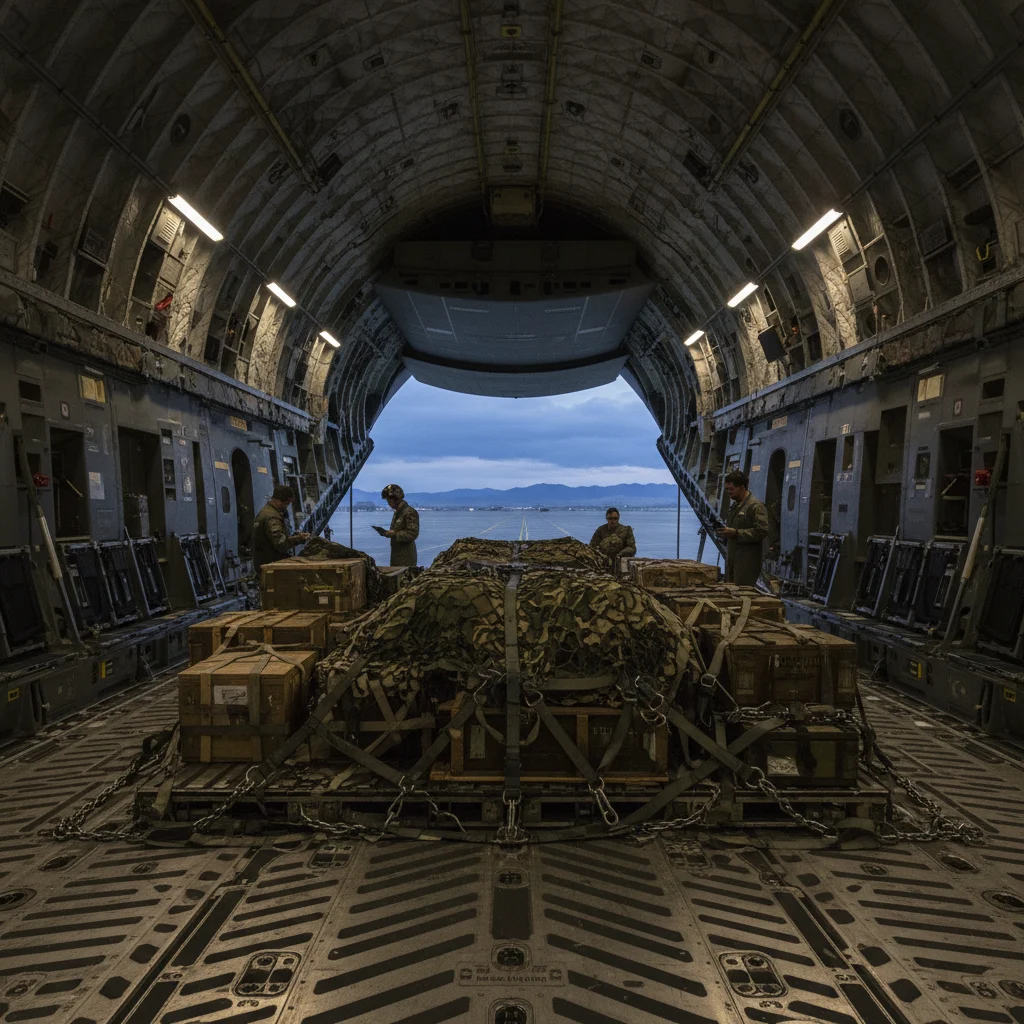
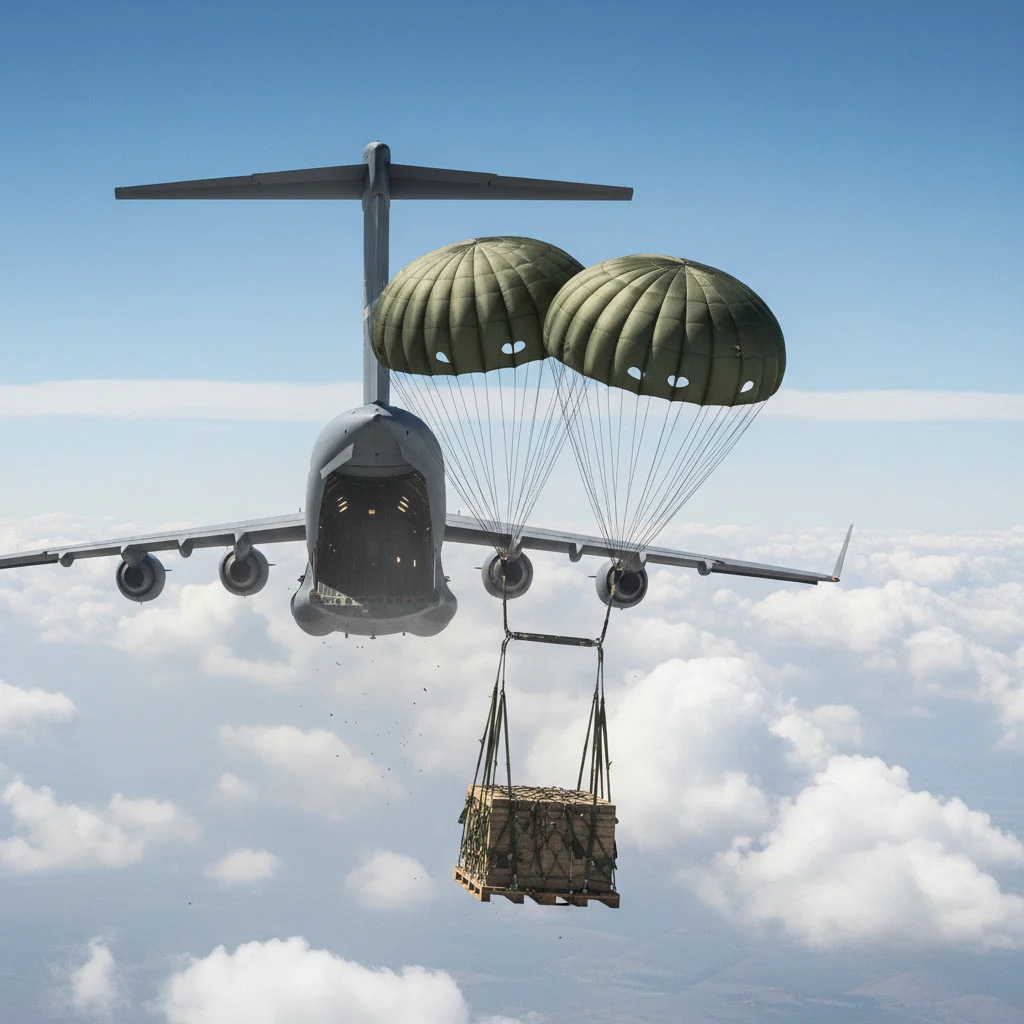
This is where palletized munitions come in. Over the last few years, the Air Force has aggressively tested and refined the ‘Rapid Dragon’ concept. It is a deceptively simple system. Instead of modifying a cargo plane to carry bombs, crews load standard shipping pallets packed with cruise missiles into C-17 Globemasters or C-130 Hercules transports.
Once the aircraft is at a safe altitude, the crew drops the pallet out of the cargo ramp. A parachute deploys, stabilizing the pallet as it drifts downward. Then, the container releases its payload: a volley of Joint Air-to-Surface Standoff Missiles (JASSM-ER) or other long-range weapons. The missiles ignite their engines and fly hundreds of miles to their targets, while the cargo plane is already heading home.
This approach turns common transport aircraft into high-capacity missile trucks. It changes the calculus for any adversary. Suddenly, every cargo plane on an airfield is a potential strategic bomber.
The Strategic Audit of 2026
Because of this shift, the remaining MOAB inventory is facing strict scrutiny. The Air Force produced only a small number of these massive weapons—believed to be around 15 in total. Maintaining them is expensive. They require specialized handling, storage, and transport. In late 2026, logistics coordinators are weighing whether the cost of keeping these weapons active is worth the limited scenarios in which they could actually be used.
‘We have to look at the return on investment,’ says one retired Air Force logistics officer, speaking on the condition of anonymity. ‘Every dollar spent maintaining a niche weapon that requires total air supremacy is a dollar not spent on stand-off capability. The logistics footprint of the MOAB is massive. It is hard to justify keeping it around in large numbers when Rapid Dragon gives you fifty times the reach.’
A Niche Future?
The evaluation does not necessarily mean the MOAB will be retired immediately. The bomb still holds psychological value. It also remains highly effective for specific, uncontested missions, such as clearing massive minefields or destroying deeply buried bunkers in regions where enemy air defenses have already been dismantled. But its days as a centerpiece of heavy ordnance doctrine are numbered.
The military’s transition reflects a broader shift toward distributed lethality. In future wars, the Air Force expects its bases to be targeted. Aircraft will have to operate from dispersed, austere airfields. In such a scenario, the flexibility of palletized weapons is unmatched. A cargo plane can fly in, drop supplies, load a Rapid Dragon pallet, launch a strike, and return to a makeshift runway. The MOAB, with its immense weight and highly specific carriage requirements, simply does not fit into this agile combat employment model.
Ultimately, the late 2026 review is a pragmatic response to a more dangerous world. As the threat of peer conflict looms, the Air Force is choosing survivability over sheer shock value. The ‘Mother of All Bombs’ may soon find itself relegated to history books, replaced by silent wooden pallets drifting through the sky, carrying the future of standoff warfare.
