
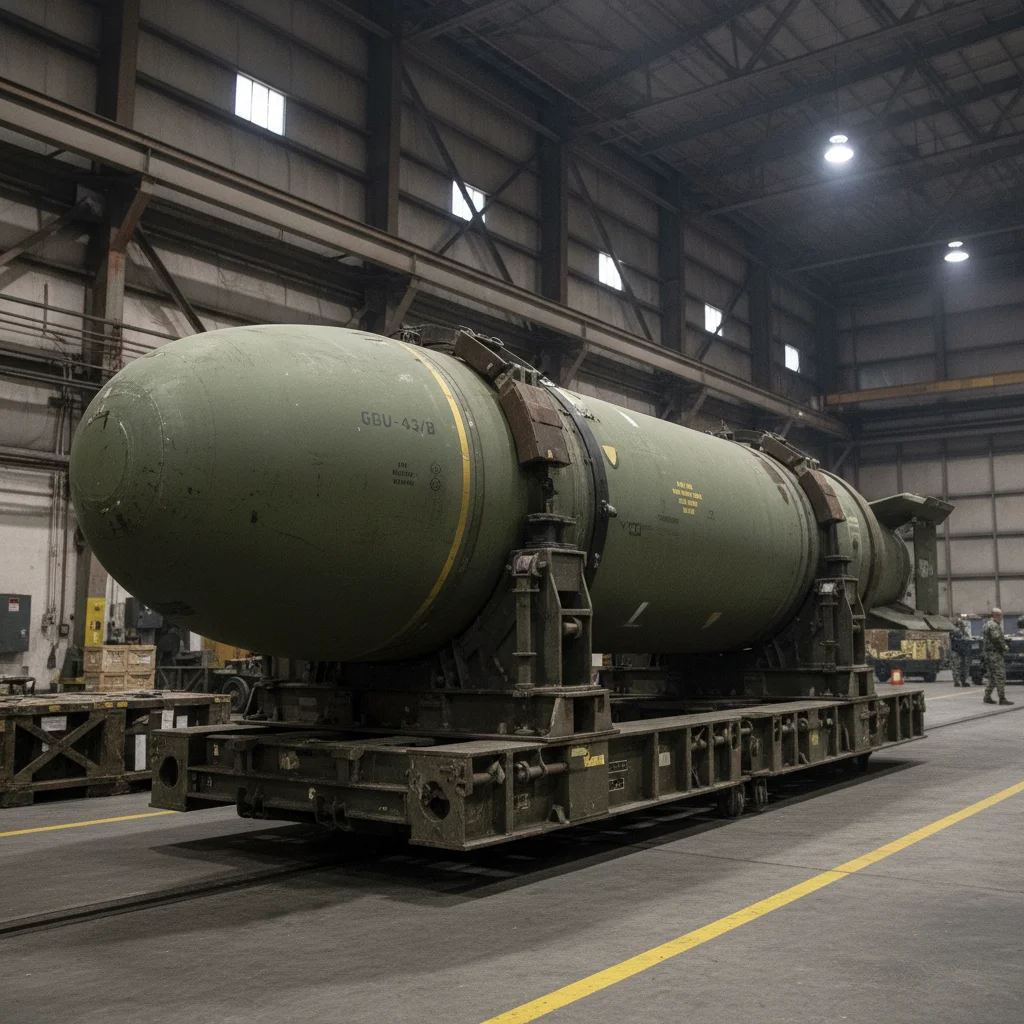
The GBU-43/B Massive Ordnance Air Blast, famously dubbed the "Mother of All Bombs," may soon be headed for early retirement. For nearly two decades, this 21,600-pound monster stood as the ultimate symbol of American conventional destructive power. But times have changed. The Pentagon is rapidly shifting its focus away from counter-insurgency operations in the Middle East and gearing up for a potential high-tech conflict in the Pacific.
Because of this strategic pivot, the Air Force is questioning whether a weapon like the MOAB still has a place in its modern arsenal. In a war against a near-peer adversary like China, the giant bomb may simply be too impractical to use.
A Weapon Built for a Different Era
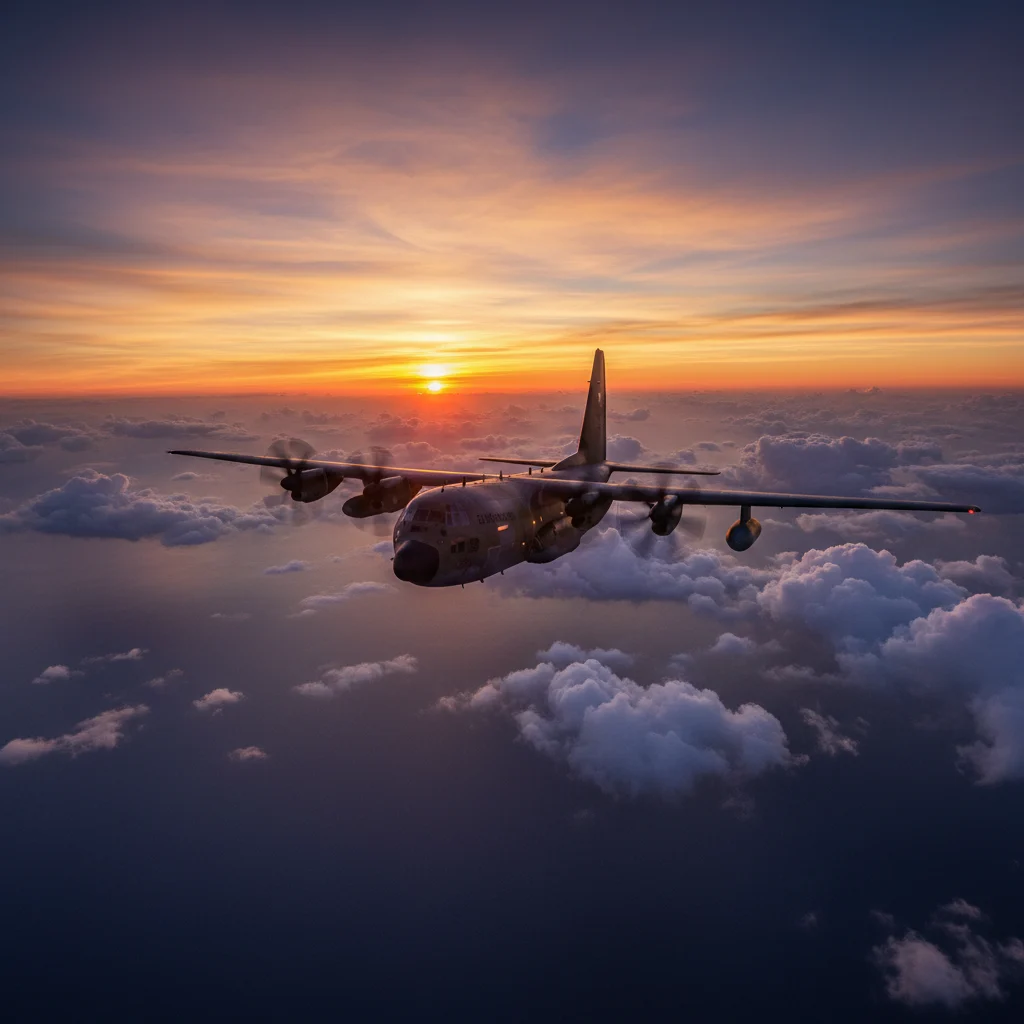
Developed in the early 2000s, the MOAB was designed as a psychological and physical hammer. It was engineered to destroy massive tunnel complexes, cave systems, and deeply buried bunkers. The weapon is so large that it cannot be carried by traditional bombers like the B-52 or B-2. Instead, it must be loaded onto an MC-130 Combat Talon, a specialized cargo plane operated by Air Force Special Operations Command.
To deploy the bomb, the crew opens the cargo ramp at high altitude. The MOAB, sitting on a cradle, is pulled out of the aircraft by a massive parachute. Once free of the plane, grid fins guide the GPS-controlled weapon to its target. It never actually hits the ground. Instead, it detonates just above the surface, creating a devastating blast wave that can destroy everything within a mile radius.
The military famously used the weapon in combat only once. In April 2017, an MC-130 dropped a MOAB on an ISIS-K tunnel network in Nangarhar Province, Afghanistan. The strike killed dozens of militants and collapsed their underground base. It was a tactical success, but the conditions of that mission highlight why the weapon is now facing retirement.
The Survival Problem in contested Airspace
In 2017, the skies over Afghanistan were completely controlled by the United States. There were no enemy fighter jets, and there was no threat from advanced surface-to-air missiles. The slow, lumbering MC-130 cargo plane could fly directly over the target zone without any fear of being shot down.
A conflict in the Indo-Pacific would look entirely different. If the U.S. military found itself in a clash over Taiwan or the South China Sea, it would face China’s highly sophisticated anti-access and area-denial defense systems. Flying an unstealthy cargo transport plane into this heavily defended airspace would be a suicide mission.
Without a safe way to deliver the bomb, the MOAB becomes a multi-million-dollar liability sitting in a warehouse. This reality is forcing military planners to rethink their entire approach to heavy payloads.
The Rise of Standoff Weapons and Rapid Dragon
Instead of flying directly over a target, the Air Force wants to strike from a safe distance. This is where "standoff" munitions come in. Over the last few years, military developers have focused heavily on long-range cruise missiles and hypersonic weapons that can be launched hundreds of miles away from enemy defenses.
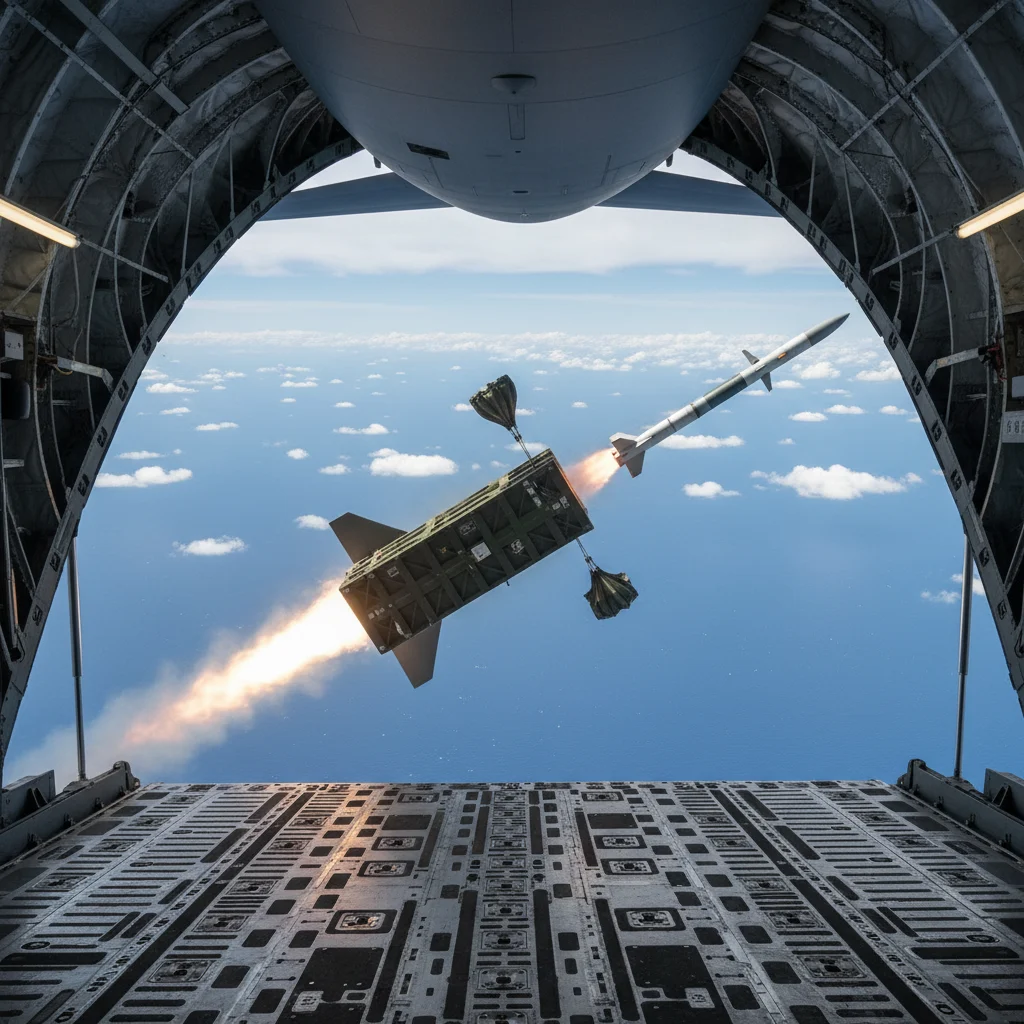
The Air Force has even found a way to turn ordinary cargo planes into missile launchers without using a weapon like the MOAB. Under a program called Rapid Dragon, cargo planes like the C-17 and EC-130 can drop palletized boxes of Joint Air-to-Surface Standoff Missiles. Once dropped, these pallets deploy parachutes, stabilize, and release a swarm of cruise missiles that ignite their engines and fly toward targets hundreds of miles away.
This system gives transport planes immense firepower while keeping the aircraft and their crews far out of harm’s way. Compared to the single-focus MOAB, a system like Rapid Dragon is much more versatile, survivable, and aligned with current defense doctrine.
An Undecided Future
While no official retirement date has been announced, military insiders suggest the writing is on the wall for the legendary bomb. Maintaining the specialized infrastructure, training transport crews for MOAB-specific drops, and storing the giant casings takes up valuable resources. Those resources, planners argue, would be better spent on buying more precision-guided standoff missiles and upgrading stealth capabilities.
The MOAB served its purpose during a period of American military history dominated by desert warfare and counter-insurgency. But as the geopolitical chessboard shifts toward the vast expanses of the Pacific, the giant bomb may simply be too heavy, too slow, and too vulnerable to survive.
