
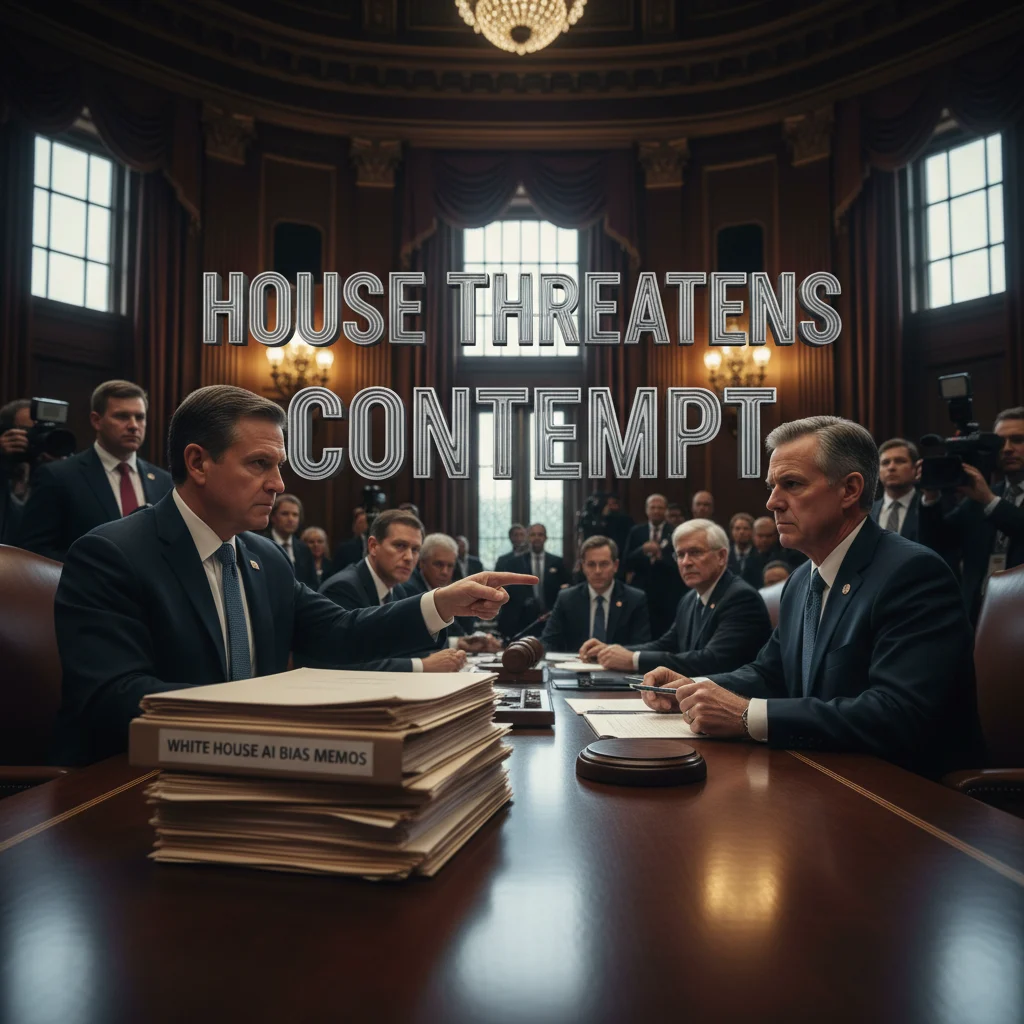
The political battle over who controls the rules of artificial intelligence has triggered a high-stakes constitutional showdown in Washington. House Oversight Committee Chairman James Comer is threatening to hold top Biden administration officials in contempt of Congress. The warning comes after the White House asserted executive privilege to block the release of internal memos concerning its new algorithmic bias regulations.
It is a classic Washington power struggle, but with a modern twist. At the center of the fight is how the federal government plans to police AI. Republicans want to know if the administration’s guidelines are a backdoor attempt to enforce political correctness or censor speech online. The White House, meanwhile, insists that protecting its internal deliberations is essential for good governance.
A Battle Over Drafts and Redactions
The dispute centers on the Office of Management and Budget (OMB) and the Office of Science and Technology Policy (OSTP). Congress wants to see the early drafts, emails, and internal discussions that shaped the administration’s sweeping executive order on AI, signed last fall. That order directed federal agencies to implement strict guidelines to prevent algorithms from discriminating against minority groups.
But when the Oversight Committee demanded the paperwork, they received heavily redacted files. The White House invoked executive privilege, arguing that disclosing preliminary documents would chill the free flow of ideas among policymakers. They claim the documents fall under the “deliberative process privilege”—a legal shield designed to protect confidential internal debates before a policy is finalized.
Comer is not buying it. He argues the public has a right to know how these far-reaching rules were crafted. In a sharply worded letter to the administration, the Kentucky Republican warned that the committee is prepared to initiate contempt proceedings if the White House does not hand over the unredacted records.
What is the Oversight Committee Looking For?
The committee is specifically investigating several key areas surrounding the draft regulations:
- Communications between White House staff and external activist groups or tech firms.
- Early drafts of the OMB guidance that show how the definition of “algorithmic bias” evolved.
- Internal assessments of how these regulations might impact free speech and private sector innovation.
- The legal justification used by the administration to enforce these rules across federal agencies.
“The American people deserve to know if the administration is using AI regulations to quietly police speech or enforce political agendas,” Comer said in a statement. “Hiding behind executive privilege only raises more questions about what they are trying to conceal from Congress.”
The Debate Over Algorithmic Bias
The fight highlights a deep ideological divide over how to handle emerging technologies. The debate over algorithmic bias is highly polarized. Democrats and civil rights advocates argue that AI systems, if left unchecked, can perpetuate historical discrimination in hiring, housing, and criminal justice. They view the White House’s regulatory push as a vital safeguard.
Republicans, however, see a different danger. They worry that vague rules against “bias” could be weaponized to force tech companies to censor conservative viewpoints. Critics of the administration’s policy argue that terms like “equity” and “fairness” are often used as code for political interference. They want to ensure the government is not using AI regulations to do what the Constitution explicitly forbids: controlling what people can say and see online.
The Oversight Committee’s investigation began shortly after President Biden issued his October 2023 Executive Order on Safe, Secure, and Trustworthy Artificial Intelligence. The order was hailed by the administration as a historic step to protect Americans from the risks of AI. But for congressional investigators, it was a trigger for closer scrutiny.
Executive Privilege vs. Congressional Authority
This is not the first time a president has clashed with Congress over internal documents, and it will not be the last. Legal experts note that executive privilege is not absolute. While the Supreme Court has recognized the need for presidents to receive candid, confidential advice, Congress also has broad constitutional authority to conduct oversight of the executive branch.
If the committee votes to hold an official in contempt, the path forward is complex. A contempt resolution would have to pass the full House of Representatives. From there, it would be referred to the Justice Department for potential prosecution. However, because the Justice Department is part of the executive branch, it rarely prosecutes administration officials in these disputes.
That means the battle could end up in federal court. A judge would have to balance the president’s need for confidentiality against Congress’s right to information. It is a process that could take months, if not years, to resolve.
What Lies Ahead
For now, the clock is ticking. The committee has given the White House a final deadline to comply before moving forward with a contempt vote. Whether the administration will compromise or dig its heels in further remains to be seen.
The outcome could set a major precedent. As AI continues to reshape every aspect of daily life, the rules written today will govern the technology of tomorrow. Who gets to write those rules—and how much the public gets to see of the process—is a question that Washington is still trying to answer.
CLICK HEARE TO GET FREE $100 IN AMAZON COMPANY
