
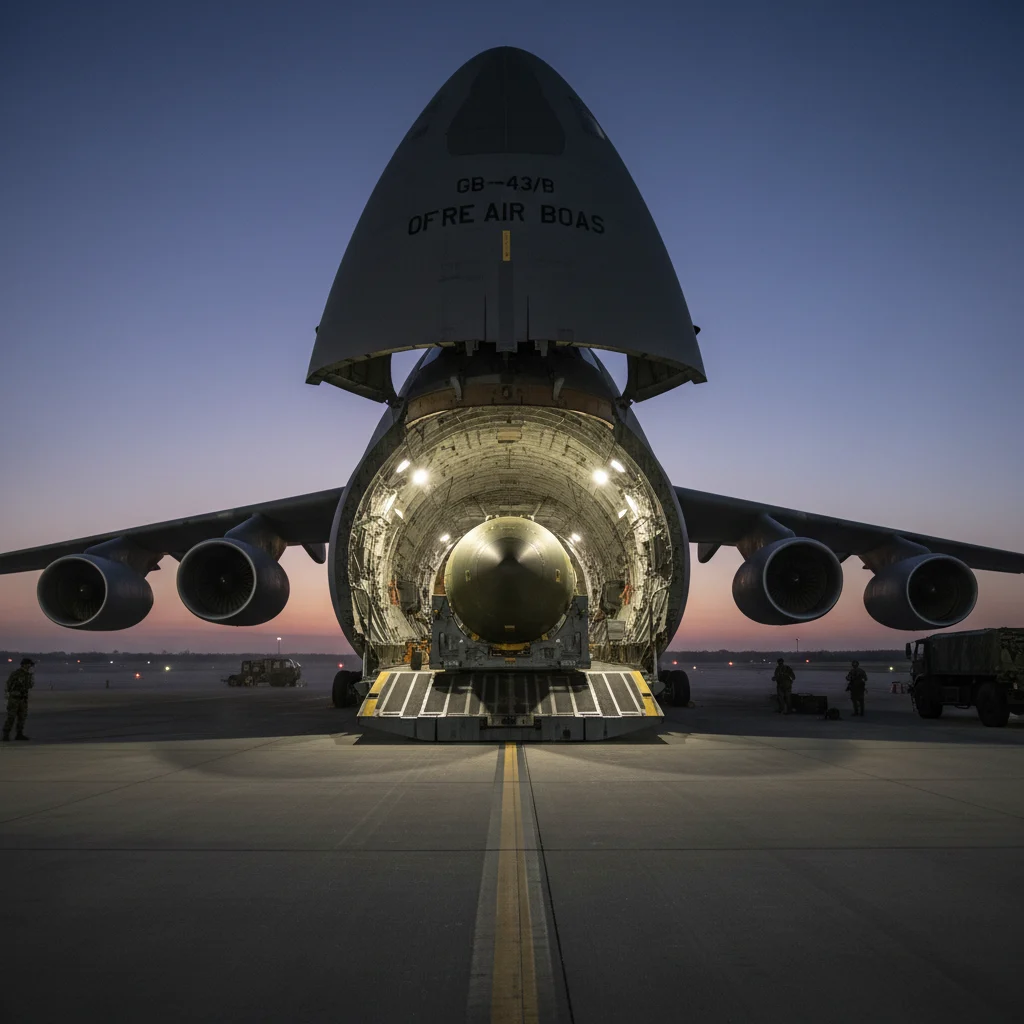
The Pentagon is preparing to quiet one of the most famous and intimidating weapons in the American arsenal. Tucked away in the upcoming Fiscal Year 2027 budget proposal, the Department of Defense has laid out plans to defund all maintenance for the GBU-43/B Massive Ordnance Air Blast program.
Most people know it by its fearsome, media-friendly nickname: the “Mother of All Bombs,” or MOAB.
If Congress approves the proposal, the decision will effectively mothball the largest conventional bomb ever dropped in combat by the United States. This move highlights a massive strategic pivot. It signals the end of an era for a weapon built for a style of warfare the U.S. military is quickly leaving behind.
A Relic of the Counter-Insurgency Era
To understand why the Pentagon is letting the MOAB collect dust, you have to look at how it works. Developed in the early 2000s by the Air Force Research Laboratory, the GBU-43/B is an absolute monster. It weighs 21,600 pounds. It is so large that it cannot fit inside the bomb bay of a standard long-range bomber. Instead, it must be loaded onto an MC-130 Combat Talon II transport plane and literally pushed out of the rear cargo ramp on a specialized cradle.
Once released, the bomb deploys grid fins and uses GPS guidance to steer toward its target. It does not penetrate the earth. Instead, it detonates just above the ground, creating a massive thermobaric blast wave. This wave can destroy shallow tunnels, cave complexes, and landmines over a wide area.
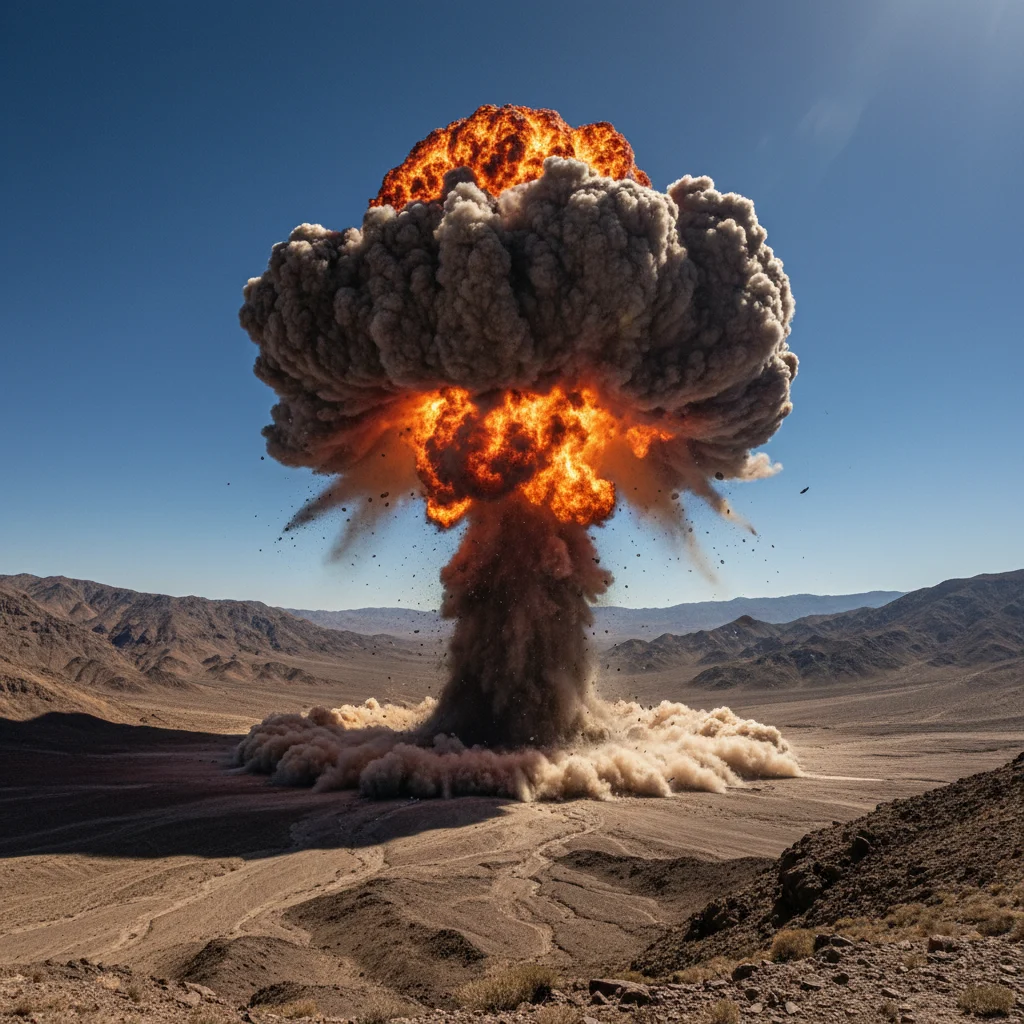
The bomb’s only combat deployment came on April 13, 2017. Under the direction of General John Nicholson, the U.S. military dropped a single MOAB on an ISIS-Khorasan cave system in the Achin district of Nangarhar Province, Afghanistan. The explosion reportedly killed dozens of militants and collapsed a network of deep tunnels. It was a massive media moment, showing off American firepower in the most dramatic way possible.
But that was a different war. Today, the Pentagon’s focus has moved on.
The Survival Problem in Contested Skies
Back in 2017, the U.S. enjoyed complete air supremacy over Afghanistan. There were no hostile fighter jets or advanced air defense radars. An MC-130 transport plane could slowly rumble over a target at medium altitude without any real threat of being shot down.
Today, military planners are preparing for a completely different scenario. The threat of a potential conflict with a near-peer adversary, like China or Russia, now dominates the Pentagon’s planning. In a high-end clash over the Taiwan Strait or in Eastern Europe, airspace will be highly contested.
Modern air defense networks, such as Russia’s S-400 or China’s HQ-9, would detect and destroy a slow cargo plane long before it could ever reach its target area.
“The MOAB is a highly specialized weapon that requires absolute control of the skies to be useful,” says military analyst Marcus Vance. “Against an adversary with modern, layered air defenses, attempting to drop a GBU-43 would be a suicide mission for the aircrew. It just does not fit the modern threat environment.”
High Costs for a Tiny Fleet
Beyond its tactical vulnerability, keeping the MOAB in service is a logistical headache. The Air Force only produced about 15 of these bombs. Maintaining such a small inventory is incredibly expensive on a per-unit basis.
Every year, specialized technicians have to inspect the explosive fillers, update the navigation software, and maintain the complex launch cradles. Aircrews also have to dedicate valuable training hours to practice dropping a ten-ton gravity bomb from a cargo deck.
By defunding the maintenance program in the FY 2027 budget, the military frees up both cash and crew hours. These resources will likely go toward stand-off precision weapons, such as hypersonic missiles and stealthy cruise missiles, which can be launched from hundreds of miles away.
Stealth and Distance Over Raw Power
While the MOAB is going away, the U.S. military is not abandoning heavy ordnance entirely. The Air Force still maintains the GBU-57 Massive Ordnance Penetrator (MOP).
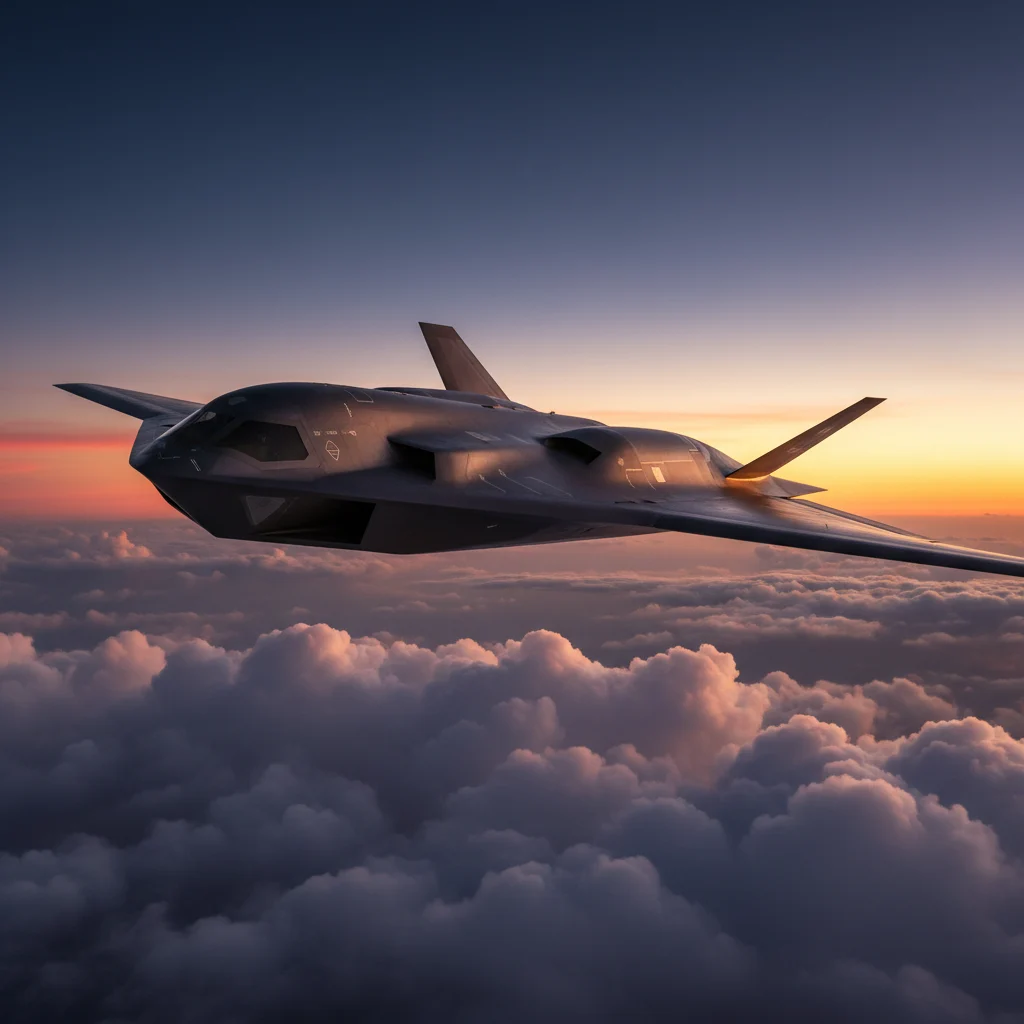
Unlike the MOAB, the MOP is designed to burrow deep into the earth to destroy heavily fortified underground command bunkers. More importantly, it can be carried inside the stealthy bomb bays of the B-2 Spirit and the upcoming B-21 Raider. This allows the military to strike heavily defended targets without exposing vulnerable cargo planes to enemy fire.
The decision to defund the GBU-43/B reflects a clear-eyed assessment of modern warfare. Psychological shock and awe are no longer enough. In the next conflict, survival and precision will matter much more than the sheer size of the blast.
