
The Unstoppable Force Meets the Anomaly
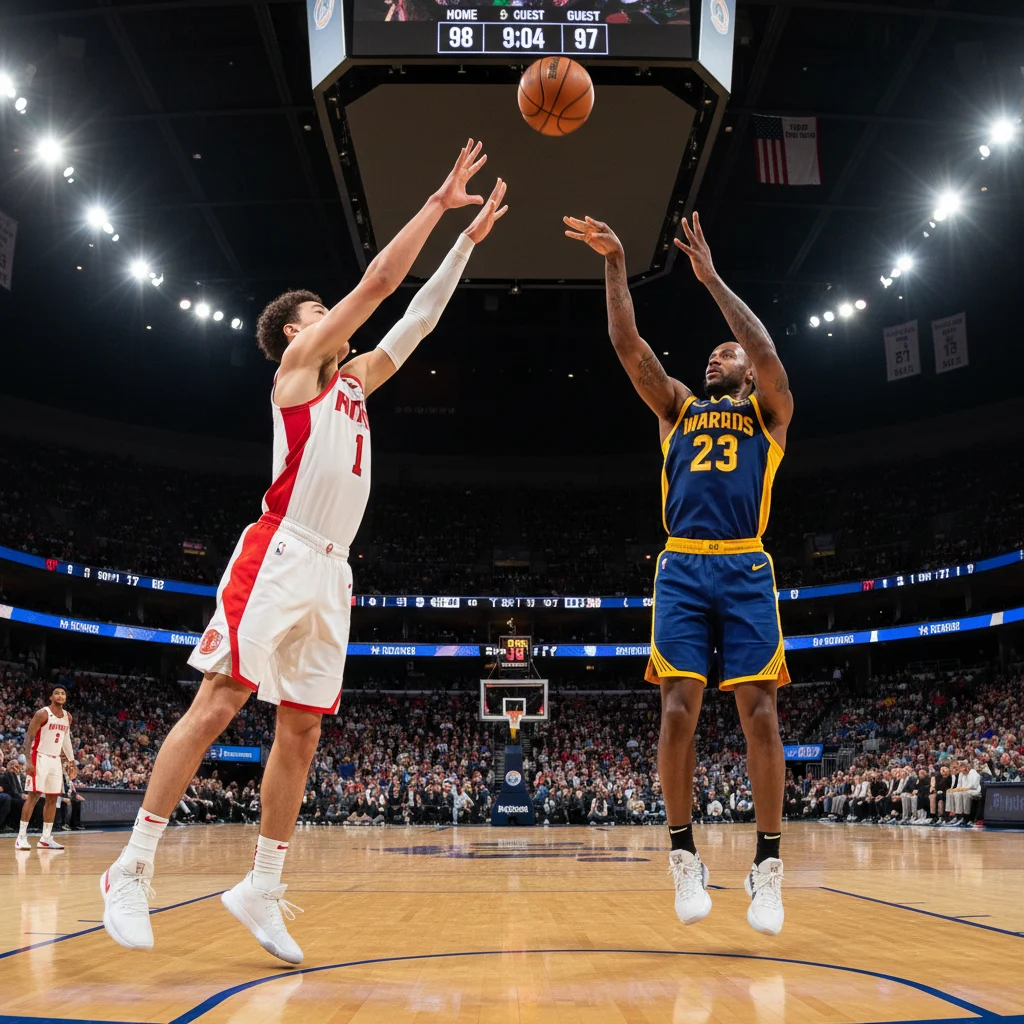
For nearly two decades, Kevin Durant has operated under a simple basketball truth: his jump shot is undefendable. At 6-foot-11 with a high release point, Durant does not see defenders; he merely sees space. When he curls off a screen, drives to the elbow, and rises for his signature mid-range pull-up, the contest of the defender is usually just cosmetic. He shoots over them. It is a mathematical certainty that has powered one of the greatest scoring careers in NBA history.
Thank you for reading this post, don't forget to subscribe!Then came late October. The San Antonio Spurs traveled to Phoenix for an early-season double-header against the Suns. It was the first real professional meeting between Durant and Victor Wembanyama, the French rookie whose physical dimensions sound like something made up in a video game creator. At 7-foot-4 with an eight-foot wingspan, Wembanyama was built to challenge things we thought were permanent in this league.
What followed over those two games was not just a pair of thrilling basketball games. It was a tactical shift. For the first time in years, Durant looked at a defender and realized his standard release height was no longer safe. The resulting matchup altered Durant’s shot chart, forced him to change his launch angle, and provided a masterclass in what coaches call defensive gravity.
Understanding Defensive Gravity
We talk a lot about offensive gravity. We know how Stephen Curry pulls defenders thirty feet away from the basket, leaving the paint wide open for his teammates. Defensive gravity is the inverse. It is the silent, psychological pressure a defender exerts simply by existing on the floor. You do not even have to challenge the shot to alter it. The mere threat of your presence changes the offensive player’s decision-making process.
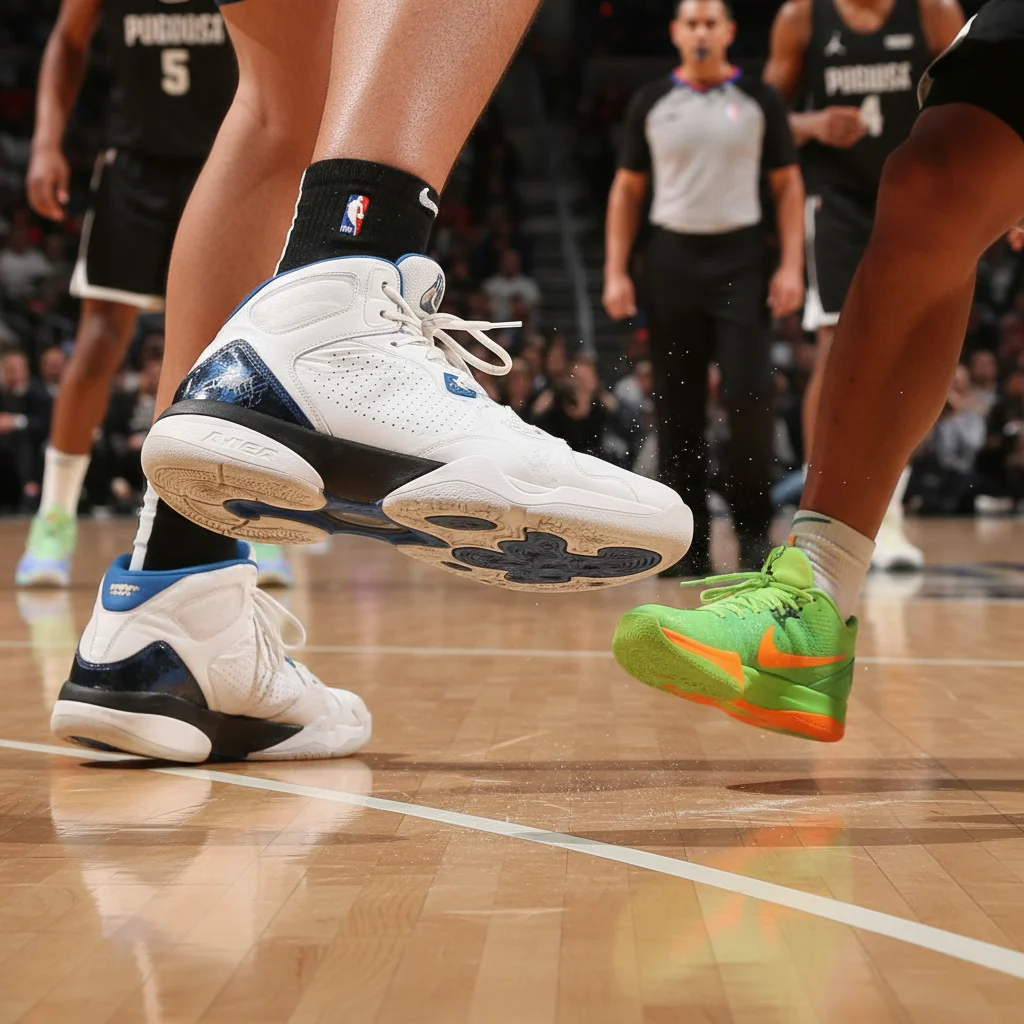
Wembanyama possesses this gravity in a way the league has rarely seen. Against Phoenix, his presence did not just result in spectacular blocked shots. It changed where Durant chose to dribble, how long he held the ball, and how much arc he had to put on his jump shots.
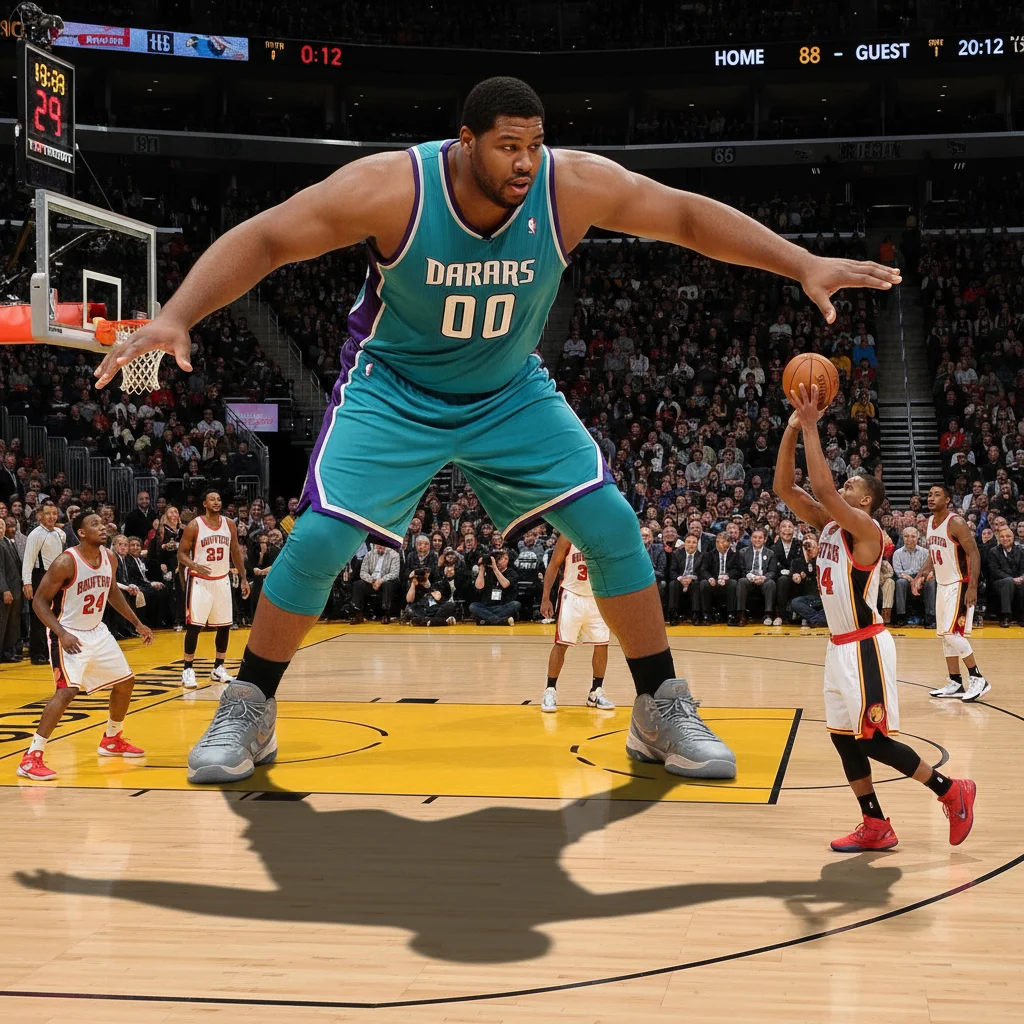
During the first half of their first matchup, Durant attempted his usual diet of mid-range pull-ups. On one specific possession in the second quarter, Durant drove left, utilized a hard crossover to create separation from Jeremy Sochan, and pulled up from fifteen feet. Usually, this is a clean look. But Wembanyama, who was guarding Drew Eubanks in the paint, took one massive step toward the perimeter. He did not jump. He just stood there, arm raised.
Durant, seeing the giant shadow, altered his shot. He released the ball higher and faster than normal. The ball clanged off the back of the rim. It was a subtle win for the defense, accomplished without a block, a foul, or even a hard contest. It was pure gravity.
The Stats Behind the Struggle
The numbers from those early games back up the tape. Durant is a career 50% shooter from the mid-range, often hovering near 55% from his favorite spots on the left elbow. When Wembanyama was on the floor during their first two meetings, that efficiency took a hit.
According to tracking data, Durant shot just 41.7% on self-created mid-range opportunities when Wembanyama was either the primary defender or the primary helper in the paint. More telling was Durant’s shot distribution. Instead of hunting his spots in the middle of the floor, Durant was forced to the corners or pushed deeper into the paint, where he was met by San Antonio’s secondary rim protectors.
Spurs head coach Gregg Popovich did not match Wembanyama up against Durant directly for the entire game. That would have been too simple, and it would have pulled Wembanyama away from his primary job as a rim protector. Instead, Popovich used a switching scheme. Durant would find himself guarded by smaller, feisty defenders like Sochan or Keldon Johnson. But the moment Durant drove past them, he entered the ‘Wemby Zone.’
The Arc Adjustment
To survive against this length, Durant had to make a physical adjustment that is incredibly difficult for a rhythm shooter. He had to change his launch angle. Sports science tracking during the games showed that Durant’s average release angle on his mid-range jumpers increased by nearly three degrees when Wembanyama was the closest defender.
Three degrees might not sound like much, but in the delicate world of elite shooting, it is a massive adjustment. It changes the muscular memory built over millions of practice shots. The ball stays in the air longer, the spin is different, and the margin for error shrinks. Durant still made some incredible shots—he is Kevin Durant, after all—but the ease of his offense was gone. Every bucket felt like a labor-intensive chore.
“He’s long, he’s tall, and he’s quick,” Durant said after the first game, reflecting on the matchup. “You have to be mindful of where he is at all times. You can’t just play your normal game. You have to think.”
The Help-Side Terror
Perhaps the most terrifying aspect of Wembanyama’s defense is his recovery speed. In the fourth quarter of the second game, Durant ran a pick-and-roll that switched Wembanyama onto the ball handler, leaving Durant to pop out to the three-point line. The ball handler found Durant, who quickly drove baseline to get to his mid-range sweet spot.
Wembanyama, who had been recovery-dropping into the paint, closed a distance of nearly ten feet in two steps. By the time Durant stopped to gather for his shot, Wembanyama was already there, towering over him. Durant had to pump fake, pivot, and pass the ball out to the opposite wing. The possession ended in a shot-clock violation.
This is what makes the rookie so unique. Most players with his length are slow-footed, bound to the paint, and vulnerable on the perimeter. Wembanyama is not. He can guard the perimeter, drop to protect the rim, and recover to contest a mid-range jumper all in the span of three seconds. He breaks the traditional geometry of the floor.
What This Means for the Future
These early-season games were a preview of the next decade of NBA basketball. For years, the league has moved toward spacing, three-point shooting, and high-efficiency mid-range scoring for superstars. But players like Wembanyama represent a counter-evolution. If one defender can cover this much ground, the value of traditional spacing starts to shrink.
Durant’s struggle to find his usual rhythm against the Spurs is a warning sign to the rest of the league. If the greatest mid-range scorer of his generation has to alter his shot mechanics just to get a clean look, what happens to everyone else? The era of the uncontested mid-range jumper might be coming to an end, or at least, it is going to get a lot more crowded.
