
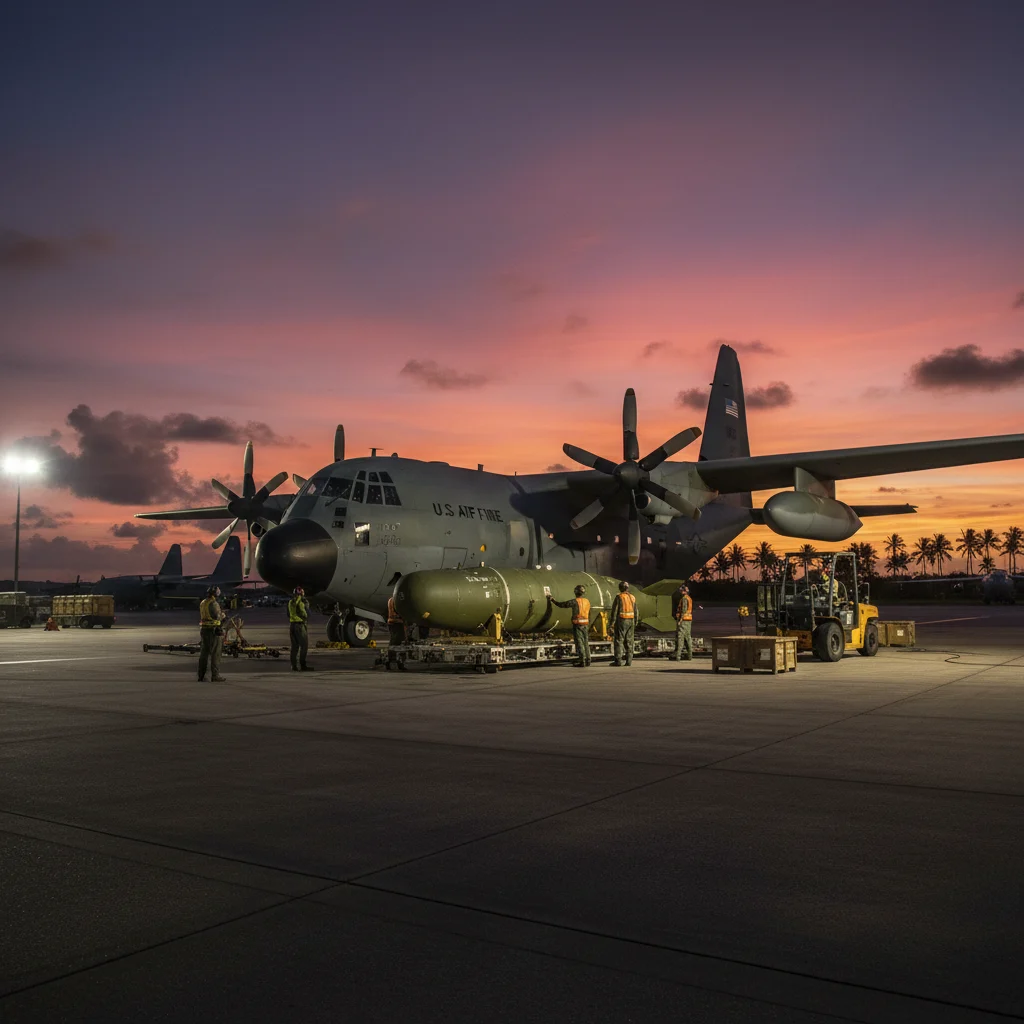
ANDERSEN AIR FORCE BASE, Guam — The U.S. Air Force has carried out a highly unusual training exercise in the Pacific, simulating the transport and deployment of its largest conventional weapon.
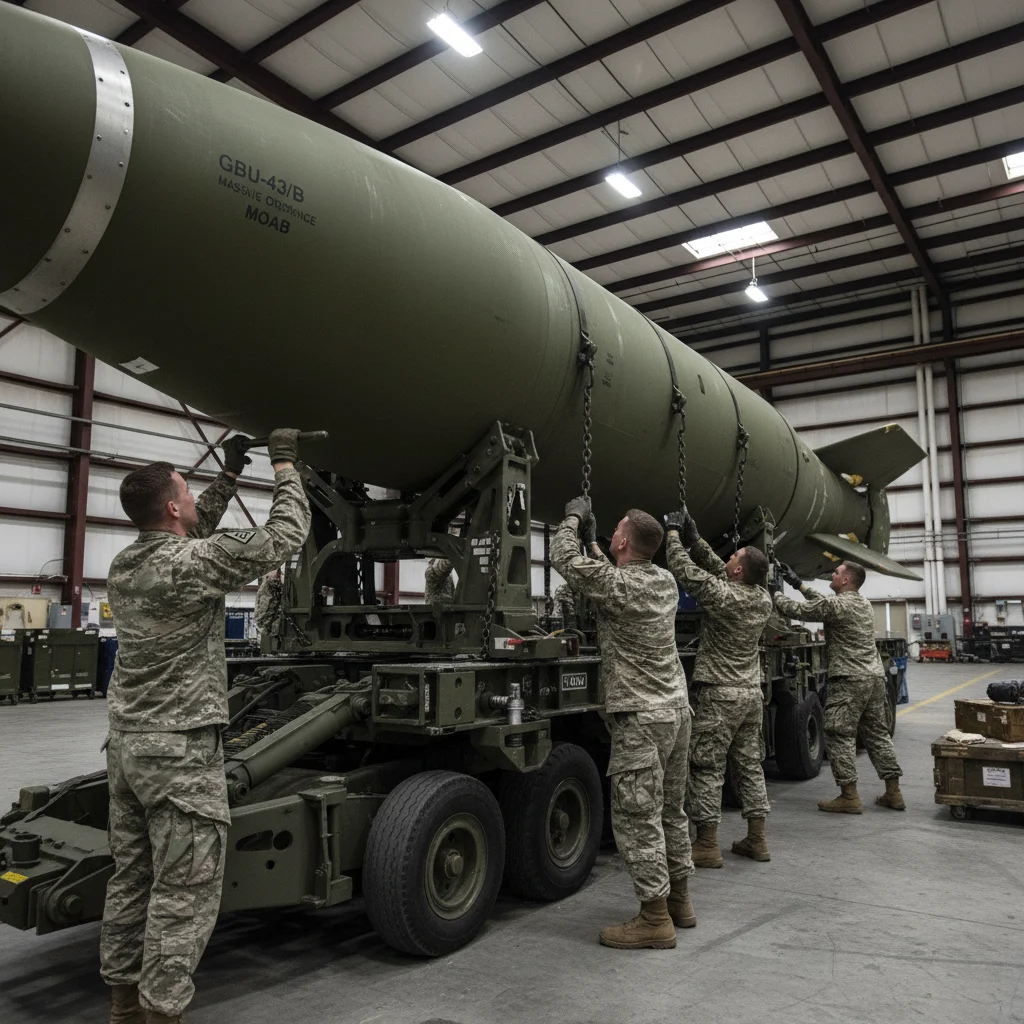
Special operations airmen in Guam recently practiced handling the GBU-43/B Massive Ordnance Air Blast. It is a devastating weapon colloquially known as the "Mother of All Bombs," or MOAB. The drill focused on using an MC-130J Commando II transport aircraft to carry the 21,600-pound munition.
It is a rare public display of heavy-hitting special operations capabilities. The timing is notable, coming during a period defined by tense standoff dynamics with China in the region.
A Rare Giant in the Pacific
The exercise unfolded at Andersen Air Force Base on the strategic island of Guam. Airmen from the 353rd Special Operations Wing, based out of Kadena Air Base in Japan, led the operation. While the Air Force did not drop a live bomb during the exercise, the training served as a proof of concept. Crews had to wrestle with the sheer logistics of moving, loading, and securing the massive weapon inside the tight cargo hold of the MC-130J.
Historically, the MOAB has seen very limited action. Its most famous combat deployment occurred in April 2017. Back then, an MC-130 dropped one on an Islamic State tunnel complex in the Achin district of eastern Afghanistan. Since then, the weapon has largely remained in storage. It is a specialized tool reserved for specific, deeply buried, or highly concentrated targets.
Deploying it in the Pacific, even in a simulated capacity, signals a shift in military focus.
"Exercises like this show that we can deliver massive firepower without relying solely on traditional strategic bombers," said one defense analyst tracking Pacific operations. "It turns a tactical transport plane into a heavy bomber."
How to Drop a 21,000-Pound Bomb
The MOAB is not your typical bomb. Because of its size and weight, it cannot be mounted on standard wing pylons. It cannot fit into the internal bomb bays of stealth fighters, either. Instead, it sits on a specialized platform inside the cargo bay of a modified C-130.
When the plane reaches the drop zone, a large drogue parachute deploys from the rear ramp. This chute pulls the entire cradle out of the aircraft. The bomb then separates from its platform, glides toward the target, and uses GPS coordinates to strike with pinpoint accuracy.
This method of dropping heavy weapons from cargo planes is gaining renewed traction. The Air Force has spent the last few years developing a concept called "Rapid Dragon." This system allows standard C-130s and C-17s to launch swarms of cruise missiles from palletized boxes slid out of the cargo door. The MOAB exercise in Guam shares a similar philosophy: maximizing the utility of transport aircraft in high-stakes conflict zones.
The Strategic Value of Guam
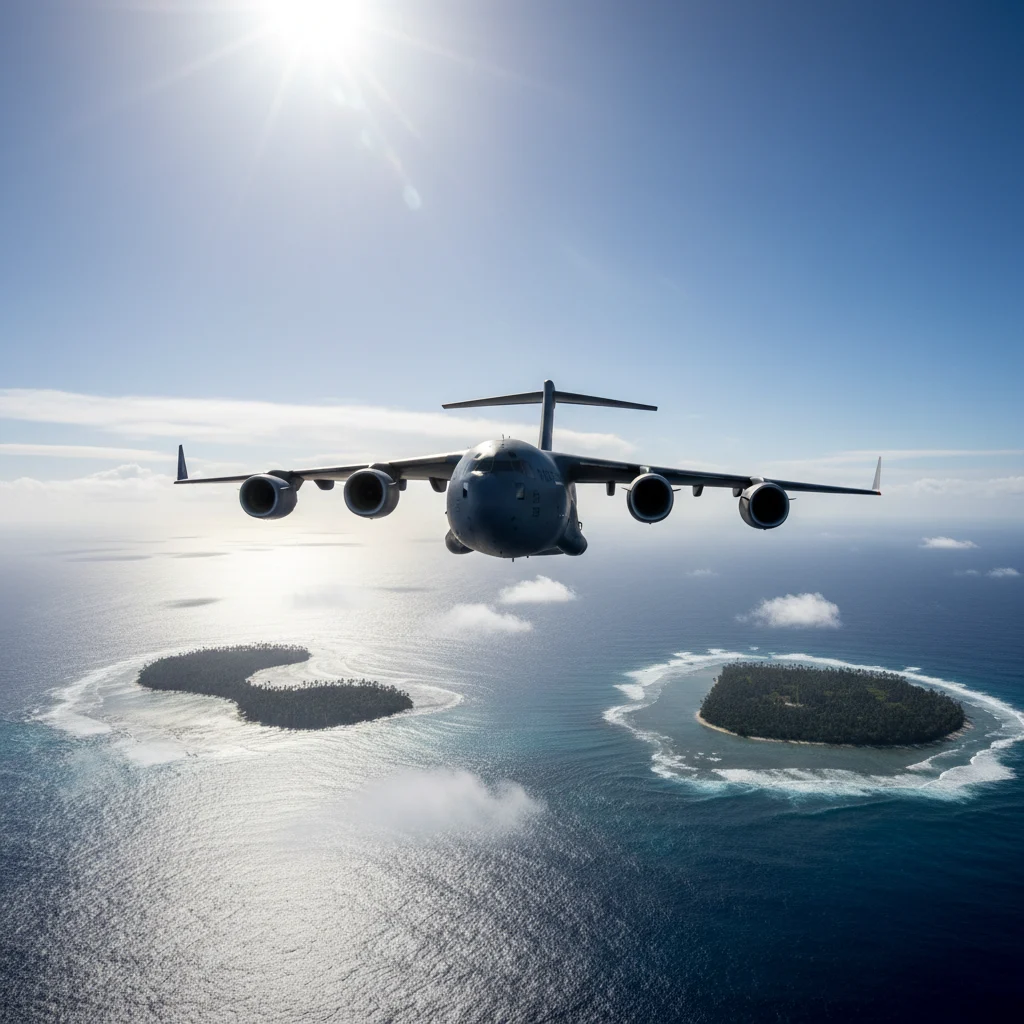
Guam is crucial. It holds key air and naval bases, putting U.S. forces within striking distance of the East and South China Seas. However, this high concentration of military assets also makes the island a prime target for adversary missiles. By demonstrating that cargo planes can double as heavy-payload strike platforms, the Air Force is showing it has options.
The logistics of handling the GBU-43/B are famously difficult. The weapon measures over 30 feet in length and contains roughly 18,700 pounds of high explosives. Loading it requires specialized ground handling equipment, precise weight-and-balance calculations, and rigorous safety protocols. If the cargo shifts even slightly during flight, the results could be catastrophic.
During the Guam drills, ground crews worked alongside flight crews to perfect these procedures. They went through the motions of preparing the weapon for flight, securing it to the aircraft’s deck, and simulating the exact sequence of events required for a successful release.
Adapting to Great Power Competition
This training comes at a time when the Air Force Special Operations Command is redefining its role. After two decades of counter-insurgency operations in the Middle East, the command is pivoting. The new focus is what the Pentagon calls Great Power Competition.
This means preparing for potential clashes with technologically advanced adversaries. In these scenarios, air superiority is not guaranteed, and logistics chains will be heavily contested.
Using the MC-130J for heavy bombing runs gives commanders in the Pacific a flexible, unpredictable option. Transport planes can land on shorter, less prepared runways than heavy bombers. This allows them to operate from dispersed island outposts throughout the region, keeping adversaries guessing.
