
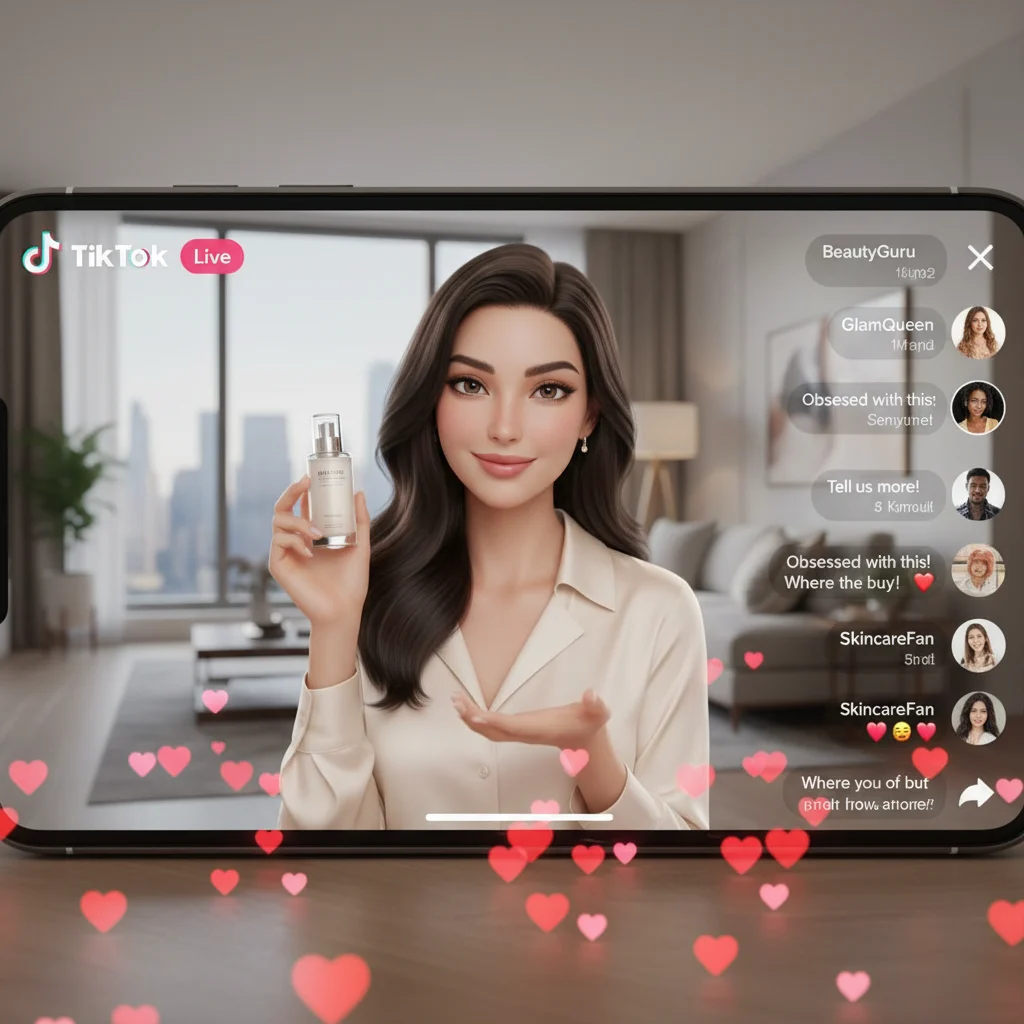
It is 4:15 a.m. on a rainy Tuesday. Most of the world is fast asleep, but on TikTok, a popular beauty influencer named Sarah is awake, glowing under studio lights, and actively selling a line of liquid lipsticks. She gestures gracefully, smiles at the camera, and speaks in her signature bubbly tone. A viewer types a question in the chat: “Does the plum shade look good on olive skin tones?”
Without missing a beat, Sarah looks directly into the lens. “Yes, absolutely! The plum shade has warm undertones that beautifully complement olive skin. Click link number three in the showcase to grab yours before we run out!”
It looks like a standard overnight livestream, but there is a catch. The real Sarah is tucked under her duvet, miles away, fast asleep. The flawless figure on the screen is her digital twin—an interactive artificial intelligence avatar trained to mimic her voice, her facial expressions, and her exact mannerisms. She is running an automated storefront, turning her social media presence into a tireless, around-the-clock sales machine.
The Midnight Sales Team
This is the new frontier of creator monetization: the automated livestream. For years, social media creators have struggled with the physical limits of their own bodies. Producing video content, editing, engaging with followers, and hosting live sales sessions is exhausting work. If a creator is not on camera, they are not making money.
But the rise of highly realistic synthetic media is changing the rules of the creator economy. By cloning themselves, creators can now establish a continuous retail presence on platforms like TikTok Shop. These digital twins can stream for hours on end, pitching affiliate products, interacting with audiences, and securing sales commissions while their human counterparts rest, travel, or work on other projects.
The appeal is obvious. Traditional live shopping requires significant resources: human hosts, a physical studio, proper lighting, and someone to monitor the chat feed. An AI avatar removes almost all of these overhead costs. It turns livestreaming from an exhausting chore into a scalable utility that runs in the background.
Behind the Screen: How the Cloning Process Works
Creating a highly convincing digital clone no longer requires a Hollywood special effects studio. Today, the process is surprisingly accessible. To build an AI twin, a creator typically uploads about ten to twenty minutes of high-definition footage of themselves speaking directly to a camera. They need to display a natural range of facial expressions, hand gestures, and vocal inflections.
Startups specializing in synthetic video use this raw data to train a custom machine learning model. The software maps the creator’s face, analyzes how their lips move in relation to specific sounds, and clones their unique vocal timbre. Once the model is generated, the creator can type out any script, and the digital twin will read it aloud with matching lip-syncing and natural body language.
The real breakthrough, however, lies in the live interactivity. A simple video loop is easy for viewers to spot and quickly becomes boring. To keep audiences engaged, creators hook their digital twins up to large language models and platform APIs. When a viewer leaves a comment or asks a question in the live chat, the system parses the text in real-time, generates an appropriate response based on a pre-loaded product information sheet, and feeds it to the avatar. The digital clone pauses its standard sales pitch, addresses the viewer by name, answers the question, and seamlessly returns to its script.
The Business of Sleeping and Selling
For many creators, the financial math behind these avatars makes total sense. Livestream shopping on platforms like TikTok Shop relies heavily on volume and consistency. The more hours a stream is live, the more likely it is to catch the algorithm’s attention and land on users’ feeds. Humans cannot stream for eighteen hours a day, but an AI clone can do it without a single break.
Then there is the sheer cost-effectiveness. Hiring a professional livestream host can cost anywhere from fifty to several hundred dollars an hour, not to mention the cost of renting studio space and hiring technical support. In contrast, many AI clone subscription services cost between fifty and three hundred dollars a month. If the digital twin sells just a handful of items during the graveyard shift, it has already paid for its monthly subscription.
This technology is democratizing e-commerce for micro-influencers who do not have the budget for a production team. They can run a global digital storefront from a single laptop. While they focus on high-level strategy, brand deals, and creative direction, their digital twins handle the repetitive, time-consuming work of daily sales pitches.
Lessons from the East
While this trend is relatively new to Western audiences, it is already a mature industry in Asia. In China, virtual live hosts have been a staple of e-commerce platforms like Douyin, Taobao, and Kuaishou for years. Major tech firms like Baidu and Tencent offer commercial packages that allow brands to deploy thousands of virtual anchors simultaneously.
In these markets, the technology has reached a point where it is difficult to distinguish a virtual host from a human one. They change outfits instantly, navigate massive product catalogs without error, and speak multiple dialects fluently. Western creators are simply taking a page from this incredibly successful playbook and adapting it for the TikTok Shop ecosystem, which has seen explosive growth over the last year.
Ethical Gray Areas and the Threat of Deception
Despite the obvious economic benefits, the rise of the automated storefront is not without controversy. Many critics argue that using digital twins without clear disclosures is deceptive to consumers. Viewers join live streams hoping for authentic human connection, and finding out they are interacting with an algorithmic shell can leave a bad taste in their mouth.
There are also strict platform regulations to navigate. TikTok, for instance, has updated its guidelines to require creators to clearly label AI-generated content. Failing to disclose that a stream is run by an avatar can result in account suspension or shadow-banning, which cuts off a creator’s visibility entirely.
Furthermore, the long-term impact on the job market is a growing concern. Professional livestream hosts and product presenters are finding themselves competing against digital versions of themselves that do not require sleep, benefits, or paychecks. It raises a difficult question: if a brand can clone its top salesperson once and run them on twenty different streams at the same time, what happens to the human workforce?
What Lies Ahead
The technology is advancing at a breakneck pace. Future iterations of these digital clones will likely feature even more advanced spatial awareness, allowing them to virtually “hold” and demonstrate physical products in three dimensions. We will also see the rise of multilingual clones. A creator based in New York could host a live shopping event in English, Spanish, Mandarin, and French simultaneously, reaching a global audience without speaking a word of a second language.
While the ethical debate continues, the financial incentives are too strong for creators to ignore. The era of the exhausted influencer trying to stay awake for a late-night broadcast is coming to an end. In its place is a new generation of digital entrepreneurs who are quietly building automated empires, one clone at a time.

Omer Faruk
Omar Faruk is a digital content creator and online publisher passionate about sharing useful information, trending news, and practical guides for internet users. He focuses on creating engaging and easy-to-understand content related to global news, entertainment, technology, online earning, and lifestyle topics.
With a strong interest in digital media and SEO-friendly content writing, Omar Faruk continuously works to build informative platforms that help readers stay updated and make better online decisions.
He believes in delivering valuable, accurate, and user-friendly content that serves a global audience and improves everyday digital experiences.