

A Border Town Bottleneck
The squeeze is tightening on Myanmar. From the high-altitude avocado orchards of the southern hills to the crowded departure gates of Yangon International Airport, the signs of a country under immense strain are everywhere. The military junta is currently grappling with a collapsing economy, complex regional diplomatic maneuvers, and deep-seated internal friction.
For local farmers, the economic blow has been sudden and devastating. Thailand has completely shuttered its markets to Myanmar’s agricultural exports, leaving growers in financial ruin. “Virtually every avocado we harvest in this country is grown for Thai buyers,” one local grower explained, speaking on the condition of anonymity. “Now that they have locked us out entirely, years of our hard work and long-term investments have just washed down the river.”
This economic blockade coincides with a harsh new legal reality across the border. A new directive from the Thai Prime Minister’s Office has officially taken effect. Under these new rules, foreign nationals who commit five specific types of offenses, including entering the country without legal documents, will face immediate deportation. For the hundreds of thousands of Myanmar migrants fleeing conflict, the safety net has just worn incredibly thin.
The Diplomatic Chessboard and Internal Power Struggles
While ordinary citizens suffer, the top generals are playing a high-stakes political game. Senior General Min Aung Hlaing recently traveled to Thailand. Analysts are debating whether this trip successfully broke his international diplomatic isolation. Naypyidaw is desperate to rebuild regional ties with ASEAN neighbors, while Bangkok is heavily focused on securing its volatile borders. It was a meeting of mutual convenience, but it did little to ease tensions back home.
Inside the regime, the political foundation is shaking. The military-backed Union Solidarity and Development Party (USDP) is preparing for its party convention in mid-September. The run-up to this gathering has already been marred by intense infighting and power struggles among the military elite. Meanwhile, General Ye Win Oo has reached his first 100 days as the military’s new chief. Observers note that his tenure has been remarkably quiet, spent almost entirely under the heavy shadow of his predecessor and boss, Min Aung Hlaing.
The battle for legitimacy between the junta and the opposition continues to widen. Dr. Salai Lian Hmung Sakhong, the Minister of Federal Union Affairs for the National Unity Government (NUG), highlighted the irreconcilable differences between the two factions in a recent interview. He made it clear that the federal system envisioned by the military is entirely different from the democratic federalism sought by the resistance. He pointed to the draft of the Asia Free Trade Agreement (AFTA) as a major point of contention. While Naypyidaw holds talks with selected ethnic armed groups, the opposition-aligned State Constitution Establishment Committee (SCEF) is holding its own parallel discussions with revolutionary forces, deepening the political divide.
Struggling for Justice and Survival on the Ground
Even in areas outside the military’s control, delivering on the promises of the revolution is proving difficult. In the Sagaing Region, where the NUG holds sway, multiple cases of sexual violence remain unresolved. Victims are left waiting as the local judicial system struggles to function amid ongoing conflict.
In junta-controlled territories, the security apparatus remains brutal. A Buddhist monk suspected of trying to form a pro-regime Pyu Saw Htee militia died during an intense interrogation. Meanwhile, the military is rounding up and arresting anyone who dares to voice criticism on social media.
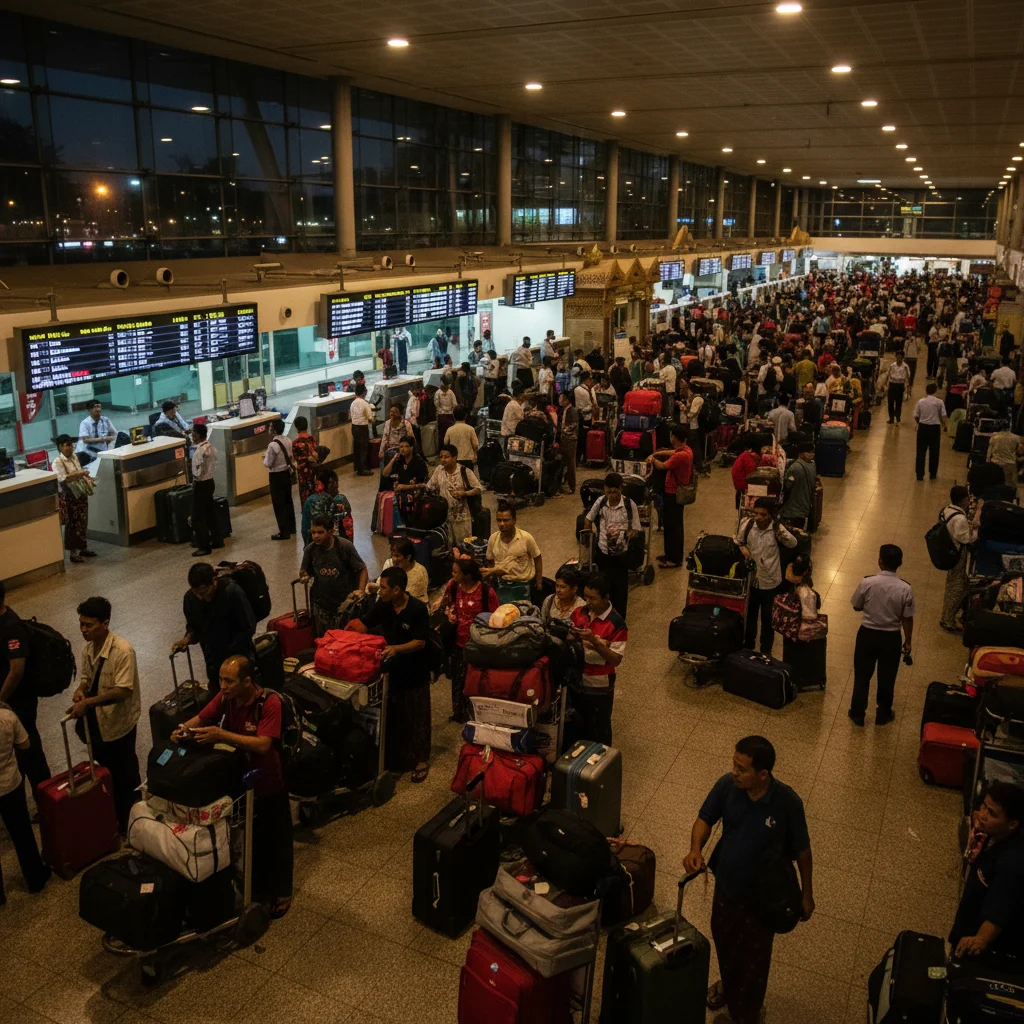
Getting out of the country has also become a grueling ordeal. Travelers at Yangon International Airport report a systemic culture of extortion. “They won’t let you pass the gates unless you pay them off,” one traveler remarked. “It has become a pay-to-leave system.”
Desperation and a Changing Society
The prolonged crisis is fundamentally changing Myanmar’s society. Among the younger generation, the psychological toll is visible. Members of Gen Z, overwhelmed by anxiety and the trauma of war, are reportedly turning to dangerous, over-the-counter medicine cocktails as a cheap escape from reality, often choosing these mixtures over alcohol.
The regime is also preparing to cut off digital lifelines. Plans are underway to block overseas access to mobile payment applications. This move aims to stop the flow of remittances sent home by migrant workers abroad, further strangling the household economies of ordinary citizens. On the borders, Chinese authorities have also begun blocking and seizing goods imported from Myanmar, closing off yet another economic escape route.
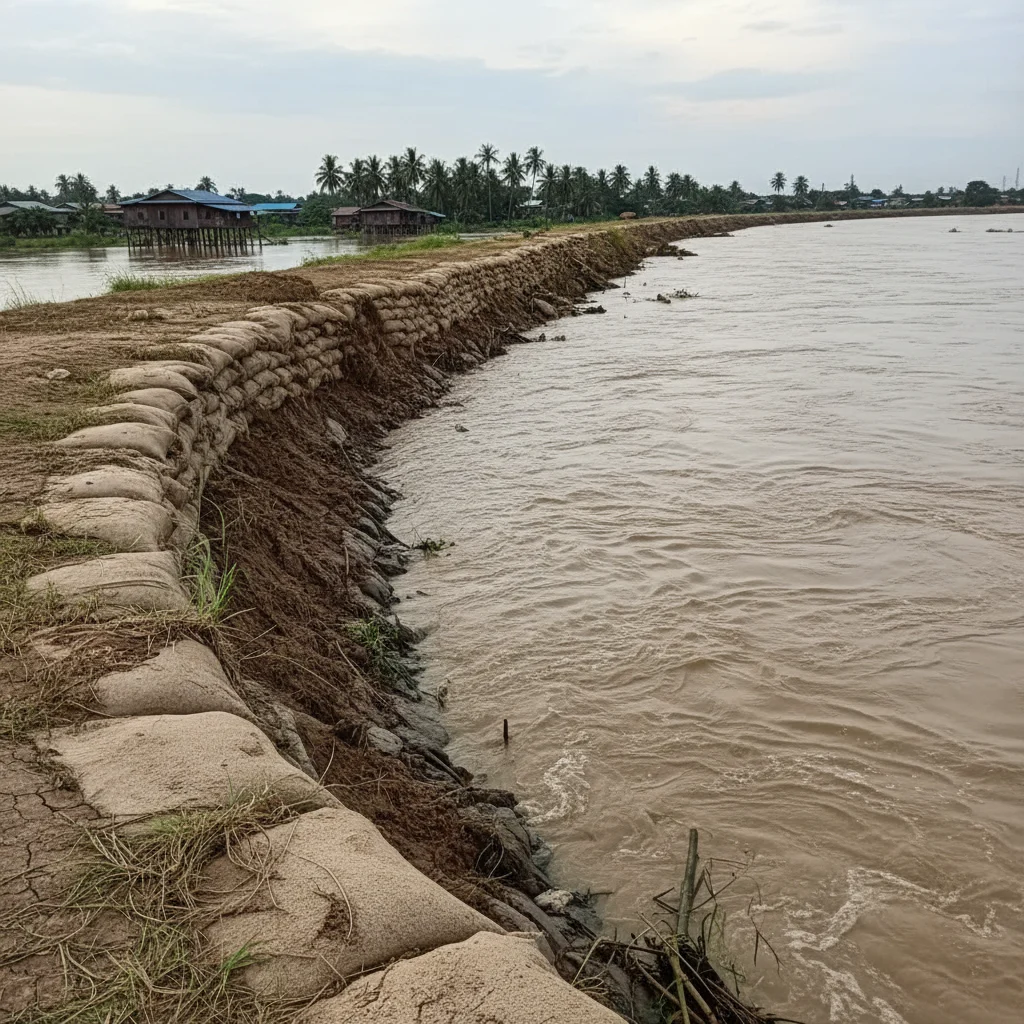
Even nature is showing no mercy. In the Ayeyarwady Region, the critical Nyaungdon Island dyke is on the verge of collapsing, threatening to flood vast tracts of farmland and displace thousands of families who have already lost so much.
A World in Turmoil
Myanmar’s domestic struggles are playing out against a backdrop of regional and global crises. In Indonesia, maritime authorities are currently investigating several Myanmar nationals captured aboard a suspected drug trafficking vessel. In Nepal, survivors of recent landslides are mourning families who were swept away in front of their eyes. “The water took my parents, my sister, and her children right in front of me,” one survivor recalled.
Further abroad, even Russia is facing a quiet crisis of its own. Following its invasion of Ukraine, Western sanctions have caused a severe shortage of imported veterinary medicines. Dozens of family pets have reportedly died after receiving poor-quality, Russian-made replacement vaccines.
Back in Myanmar, historical memories offer a stark contrast to the grim present. Intellectuals recently marked the legacy of U Thaw Kaung, the former chief librarian and Fukuoka Prize winner, whose work preserving Myanmar’s rich history remains a proud chapter for the nation. His stories, alongside the history of King Bayinnaung—the empire builder who left behind a world heritage bell inscription—serve as poignant reminders of a different Myanmar. Today, however, the country is defined not by its past golden age, but by its daily struggle to survive a fractured present.

Omer Faruk
Omar Faruk is a digital content creator and online publisher passionate about sharing useful information, trending news, and practical guides for internet users. He focuses on creating engaging and easy-to-understand content related to global news, entertainment, technology, online earning, and lifestyle topics.
With a strong interest in digital media and SEO-friendly content writing, Omar Faruk continuously works to build informative platforms that help readers stay updated and make better online decisions.
He believes in delivering valuable, accurate, and user-friendly content that serves a global audience and improves everyday digital experiences.