
The Battle Over Your Face and Voice
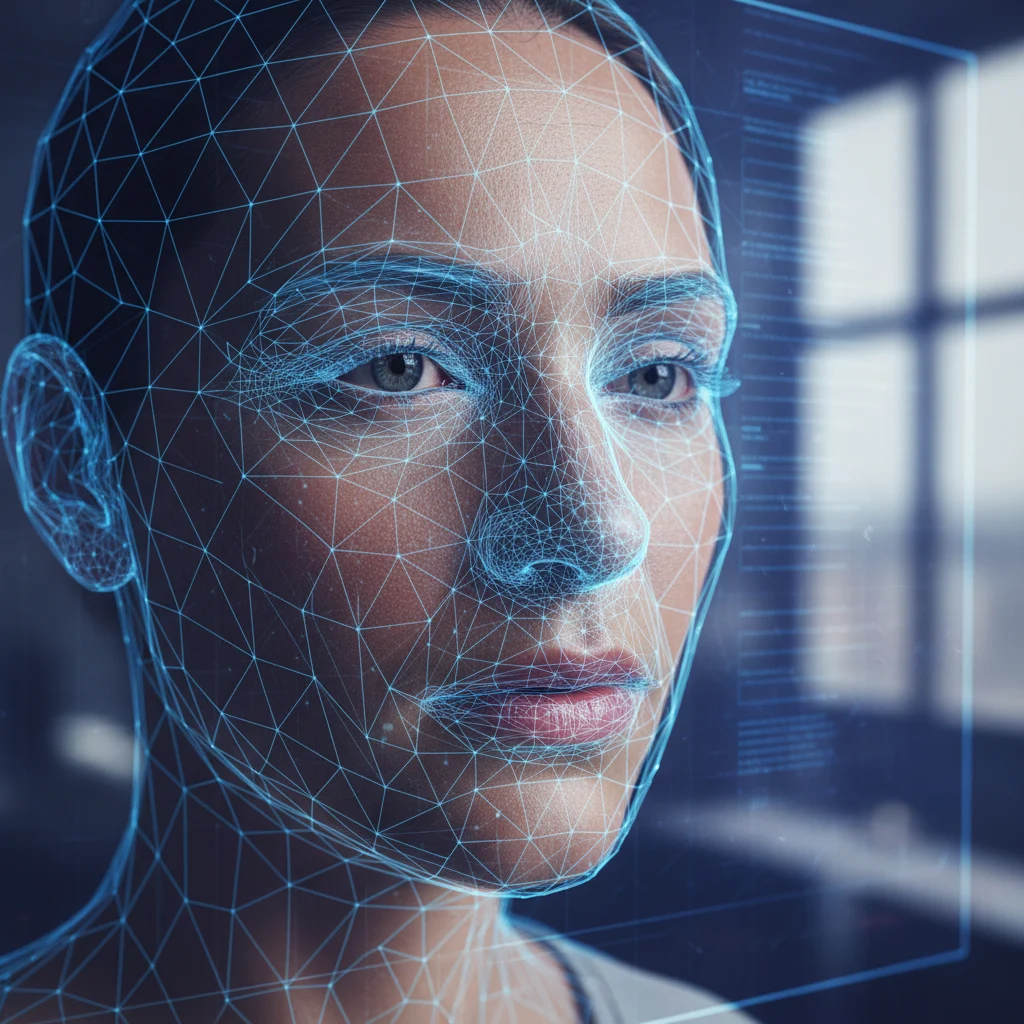
Every time you upload a selfie, post a voice memo, or share a family video online, an artificial intelligence model might be studying you. Tech companies routinely scrape the internet for public data to train their generative AI tools. Now, New York lawmakers want to build a legal wall around your biometric identity.
Thank you for reading this post, don't forget to subscribe!A newly introduced bill in the New York State Assembly aims to stop this quiet harvesting. If passed, the legislation would ban tech companies from using biometric data—ranging from facial geometry and voiceprints to fingerprints and iris scans—to train generative AI models unless they get explicit, opt-in consent from the user first.
It is a bold move. It directly challenges the ‘ask forgiveness, not permission’ playbook that has defined the generative AI boom over the last few years.
Flipping the Default to Consent
Currently, most AI developers operate on an opt-out model, if they offer any choice at all. They gather massive datasets from the open web, train their algorithms, and sometimes provide a complicated form for users who want their data removed later. This bill flips that dynamic entirely.
Under the proposed law, the default setting is privacy. A company cannot touch a New Yorker’s biometric data for AI training until that person signs on the dotted line, or clicks a clear, unambiguous ‘yes.’

‘For years, tech companies have treated our personal data like free oil,’ says Sarah Patel, a digital rights advocate who has consulted on state tech policy. ‘But your face isn’t just data. It’s your identity. This bill finally treats it that way.’
The definition of biometric data in the bill is broad. It covers physical, physiological, and behavioral characteristics. That means a video of you laughing, a recording of your podcast, or even the way you walk could be off-limits to AI scrapers unless you give the green light. For the everyday user, this could mean an end to the feeling that their online lives are being monetized without their knowledge.
A Heavy Financial Toll for Violations
Laws are only as good as their enforcement. The New York bill does not just warn tech firms; it threatens them with severe financial penalties.
The legislation includes a ‘private right of action.’ This is the holy grail for privacy advocates and the ultimate dread for corporate lawyers. It allows individual citizens to sue companies directly for violations, rather than waiting for the state attorney general to take action. Under the current draft, companies could face fines of thousands of dollars per violation. When multiplied by millions of internet users, those numbers become existential threats for even the wealthiest tech giants.
We have seen this play out before. Illinois passed its landmark Biometric Information Privacy Act, known as BIPA, back in 2008. Thanks to its private right of action, BIPA has led to massive class-action settlements. Facebook settled a BIPA lawsuit for $650 million. Google settled one for $100 million. New York’s bill could trigger an even larger wave of litigation, given the state’s massive population and its role as a global financial hub.
The Pushback from Silicon Valley
Unsurprisingly, the tech industry is lobbying hard against the proposal. Industry trade groups argue that the bill is too broad and could cripple the development of useful AI technologies in the Empire State.
Opponents claim that separating biometric data from general web data is technically impractical. They argue that web scrapers cannot easily tell if an image of a face belongs to a New Yorker or someone living in another state or country. Implementing these restrictions, they say, might force AI companies to block New York residents from using their services altogether to avoid legal risks.
‘Legislation like this sounds good on paper, but it ignores how the internet actually works,’ says Marcus Vance, a policy analyst at a tech-funded think tank. ‘If you make the rules too rigid, companies won’t comply—they will just leave. New York risks locking itself out of the next industrial revolution.’
There are also concerns about how the law would affect smaller startups. While giants like Microsoft, Google, and Meta have the legal teams and cash reserves to navigate complex regulatory frameworks, open-source developers and small tech firms might find the compliance costs impossible to bear. Critics worry this will only solidify the monopoly of the largest tech companies.
The Legal Showdown Over ‘Fair Use’
At the heart of this legislative push is a fundamental disagreement over copyright and intellectual property. AI companies have long argued that scraping public data falls under the ‘fair use’ doctrine of US copyright law. They compare AI learning to a human looking at public art to learn how to paint.

But privacy advocates argue that biometric data is different. It is not just creative work; it is highly personal identification data. This creates a fascinating legal gray area. Can a company claim ‘fair use’ on a mathematical map of your face? New York lawmakers are betting they cannot.
If the bill passes, it would set a major legal precedent. It would establish that biometric patterns are personal property, distinct from standard web data. This could fundamentally alter how AI models are built, forcing companies to buy licensed training datasets rather than scraping the open web for free.
Closing the Voice-Cloning and Deepfake Loophole
Supporters of the bill argue these fears are overblown. They point to the growing dangers of unregulated biometric scraping. Voice cloning scams are on the rise. Scammers use short audio clips from social media to mimic family members begging for money. Deepfake videos are disrupting local school boards, workplaces, and elections.
By cutting off the supply of training data, lawmakers hope to starve these malicious technologies at the source. If an AI developer cannot legally train a voice-cloning model on public audio without consent, creating convincing deepfakes becomes much harder.
The bill also touches on a sensitive labor issue. Actors, musicians, and writers have been sounding the alarm about AI replacing them. For voice actors, their vocal cords are their livelihood. Under this bill, an AI company could not scrape an actor’s audiobooks or voiceover work to train a synthetic voice generator without a direct agreement. This could give creative professionals a vital tool to protect their careers.
A Fragmented National Map
If New York succeeds, it could trigger a domino effect across the country. California and Massachusetts are already debating similar measures. However, a state-by-state approach presents challenges of its own.
With several states writing their own rules, the US tech sector could face a confusing patchwork of regulations. What is legal in Texas might be illegal in New York. This fragmentation is precisely why some tech companies are starting to call for a unified federal privacy standard. But with Congress gridlocked on tech regulation, states are taking matters into their own hands.
The bill is currently making its way through the committee process in Albany. It faces a long, winding road before it can become law. Lobbyists are already working to water down the bill’s most potent provisions, particularly the private right of action. Until then, the battle for control over our digital faces and voices will be fought state by state, court by court.
