
A New Scale of War Games at Fort Cavazos
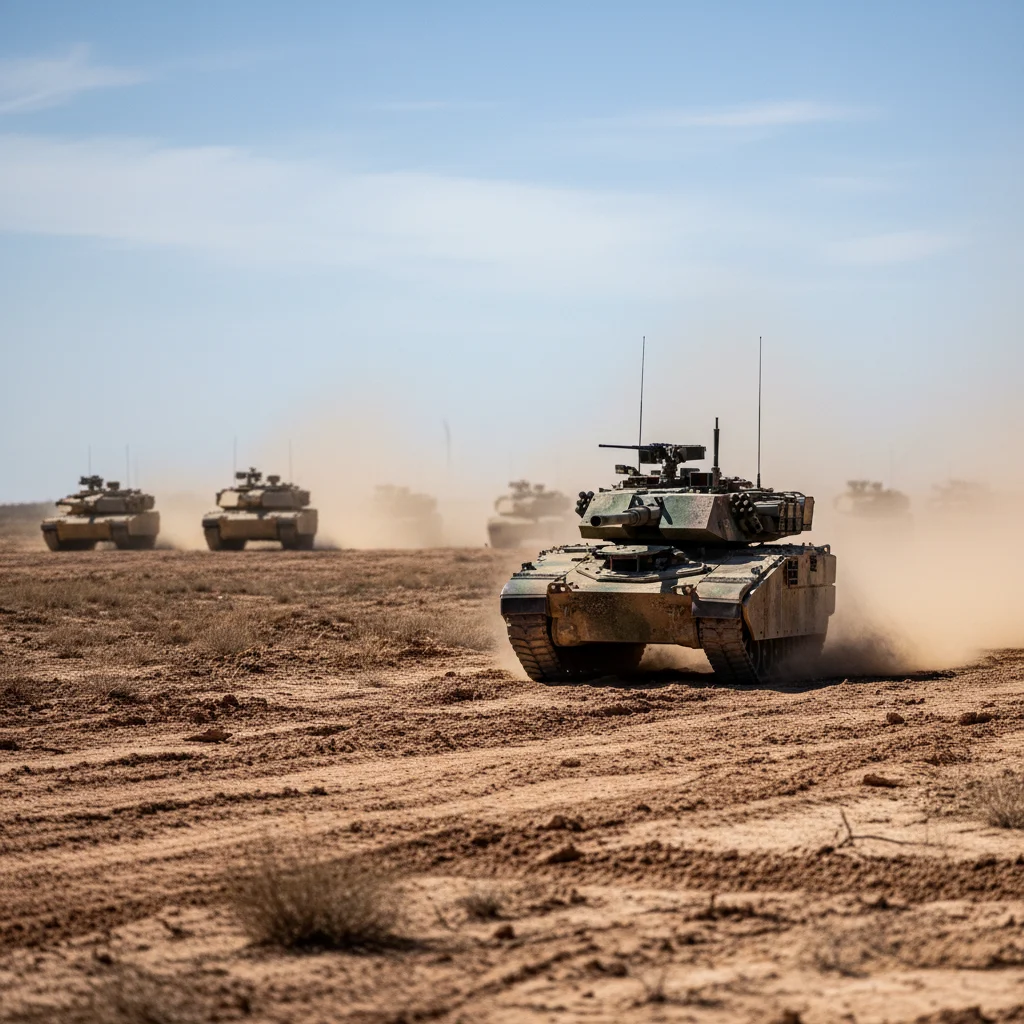
The dust at Fort Cavazos rarely settles. In October 2026, the grit in the air came with a heavy dose of high-tech exhaust. For two weeks, the sprawling Texas training grounds hosted a massive shift in how the U.S. Army plans to fight. This was not a small-scale experiment. It was a massive, division-level warfighter exercise where automated machinery took the lead on a simulated battlefield.
Lt. Gen. Brett Sylvia, commander of the III Armored Corps, watched the transformation unfold from his command post. For Sylvia, the exercise marked a critical milestone. The military is moving past the phase of testing single prototypes. Instead, they are looking at how an entire division fights when robots do the dirty work. “We are no longer just experimenting with cool gadgets in a lab,” Sylvia noted during an after-action review. “We are asking a division commander to fight with these tools today. That changes everything.”
Putting Metal Before Flesh on the Battlefield
At the heart of the October maneuvers was the deep integration of Robotic Combat Vehicles (RCVs). Historically, the Army has tested unmanned ground vehicles in small, isolated groups. Usually, these tests stayed at the platoon or company level. This time, the “Phantom Corps” scaled things up. Automated scouts pushed miles ahead of manned M1A2 Abrams tanks and Bradley Fighting Vehicles. They probed simulated enemy lines and drew defensive fire.
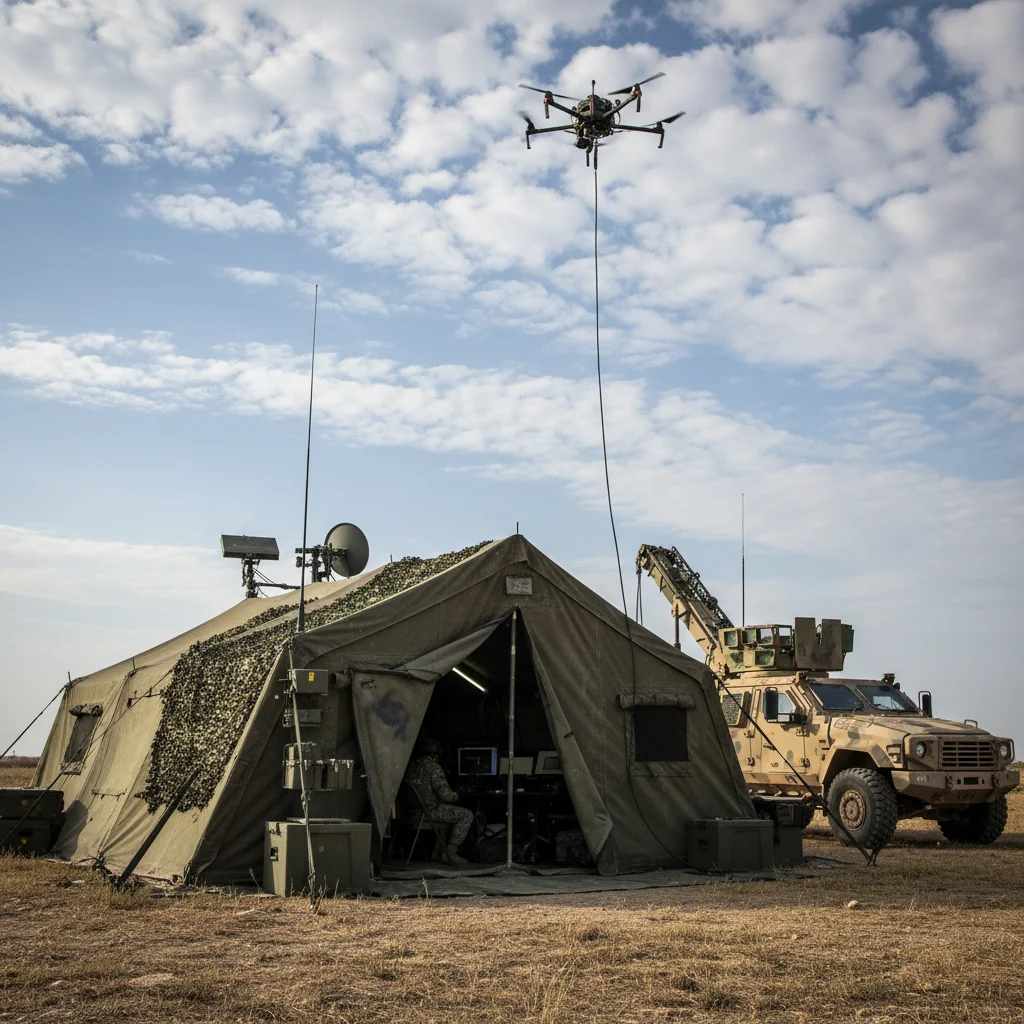
The underlying philosophy is simple: put metal before flesh. By sending autonomous platforms into the teeth of enemy defenses first, commanders can locate enemy artillery and anti-tank positions without risking human lives. But executing this at a division scale is incredibly complex. It requires seamless data sharing across hundreds of platforms. When a robotic scout spots an enemy position, that target data must instantly reach manned artillery units miles to the rear. Sylvia noted that while the hardware performed well, the real battle was fought in the electromagnetic spectrum.
Eyes in the Sky: Tethered Drone Systems
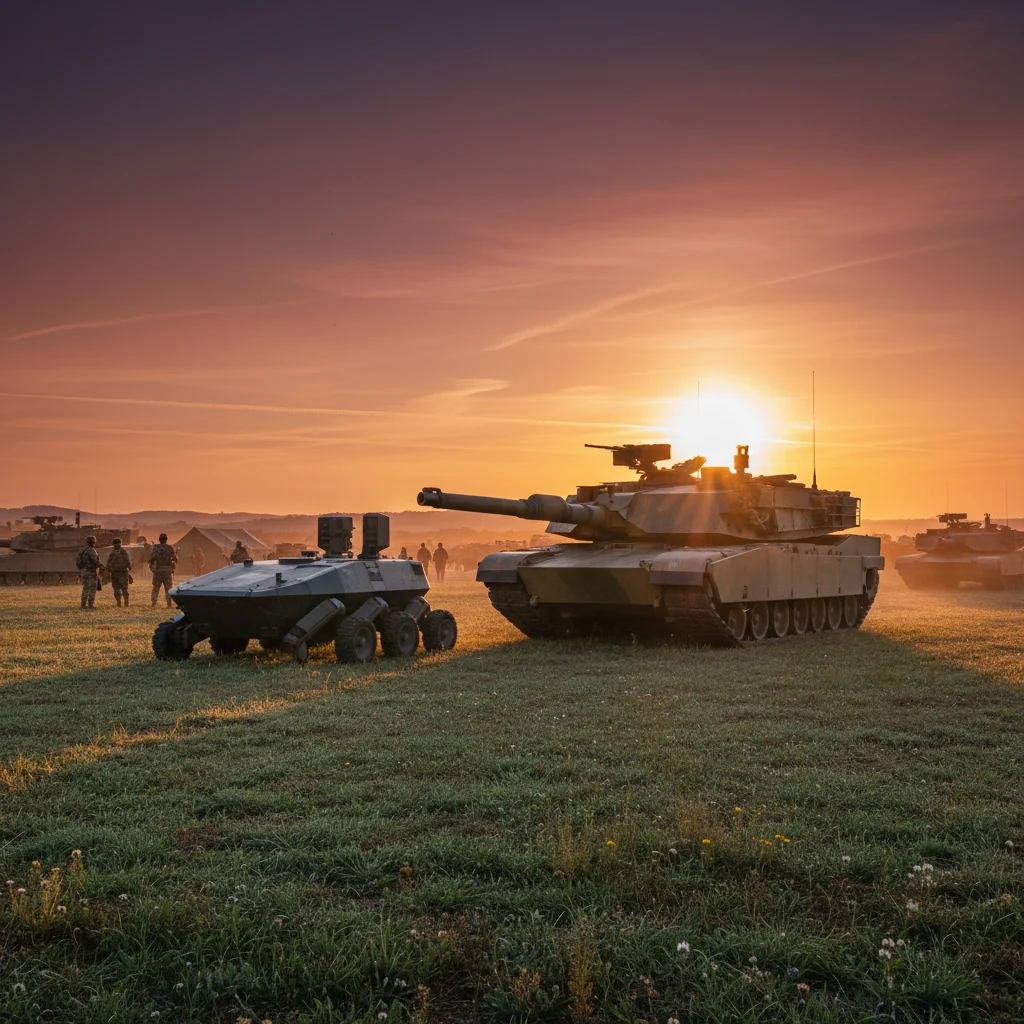
While ground robots cleared the path, tethered drone systems kept watch from above. Unlike traditional quadcopters that must land every thirty minutes to swap batteries, these specialized drones are linked to ground vehicles by a physical cable. This tether provides continuous power and a hardwired, jam-resistant data connection. They stay up for days, not hours.
During the October exercises, these eye-in-the-sky systems proved to be vital assets for local command posts. They hovered continuously, mapping terrain, tracking enemy movements, and acting as signal relays in areas where the Texas hills blocked radio signals. Under heavy simulated electronic warfare attacks, these physical tethers kept the communication lines open. When the enemy jammed the airwaves, the physical cables kept data flowing. It kept the command post connected to the front lines when normal radios went silent.
The Hard Truths of High-Tech Warfare
It was not all smooth sailing. Lt. Gen. Sylvia was quick to point out the friction points that always emerge when legacy military units meet cutting-edge tech. Heavy rain and thick Texas mud slowed down some of the lighter autonomous vehicles. Network lag occasionally delayed target handoffs from scout to shooter. There is also the human element. Soldiers trained for years on traditional armor tactics had to learn to trust the data coming from an unmanned machine.
The tech is ready. The doctrine is not. That is the hard truth of rapid modernization. The III Armored Corps commander emphasized that these exercises are designed to find these exact breaking points. “If we do not break the system here, we will not know how to fix it before the real fight,” Sylvia said. He stressed that the integration of artificial intelligence and robotics requires a complete rewrite of tactical doctrine. It is not just about replacing a human driver with an algorithm. It is about changing how a general thinks about time, space, and risk on the modern battlefield.
What Comes Next for the Phantom Corps
As the exercises wrapped up, the massive trove of data collected was sent back to developers and doctrine writers across the Army. The lessons learned at Fort Cavazos will shape the procurement of the Army’s next generation of combat vehicles. For Sylvia and the III Armored Corps, the path forward is clear. The future of armored warfare is hybrid. It is a world where human intuition and machine speed work in tandem.
The October warfighter exercise proved that the U.S. Army is moving past the pilot-program phase. The autonomous revolution has arrived at the division level. Now, the challenge is keeping up with the pace of the technology itself.
