
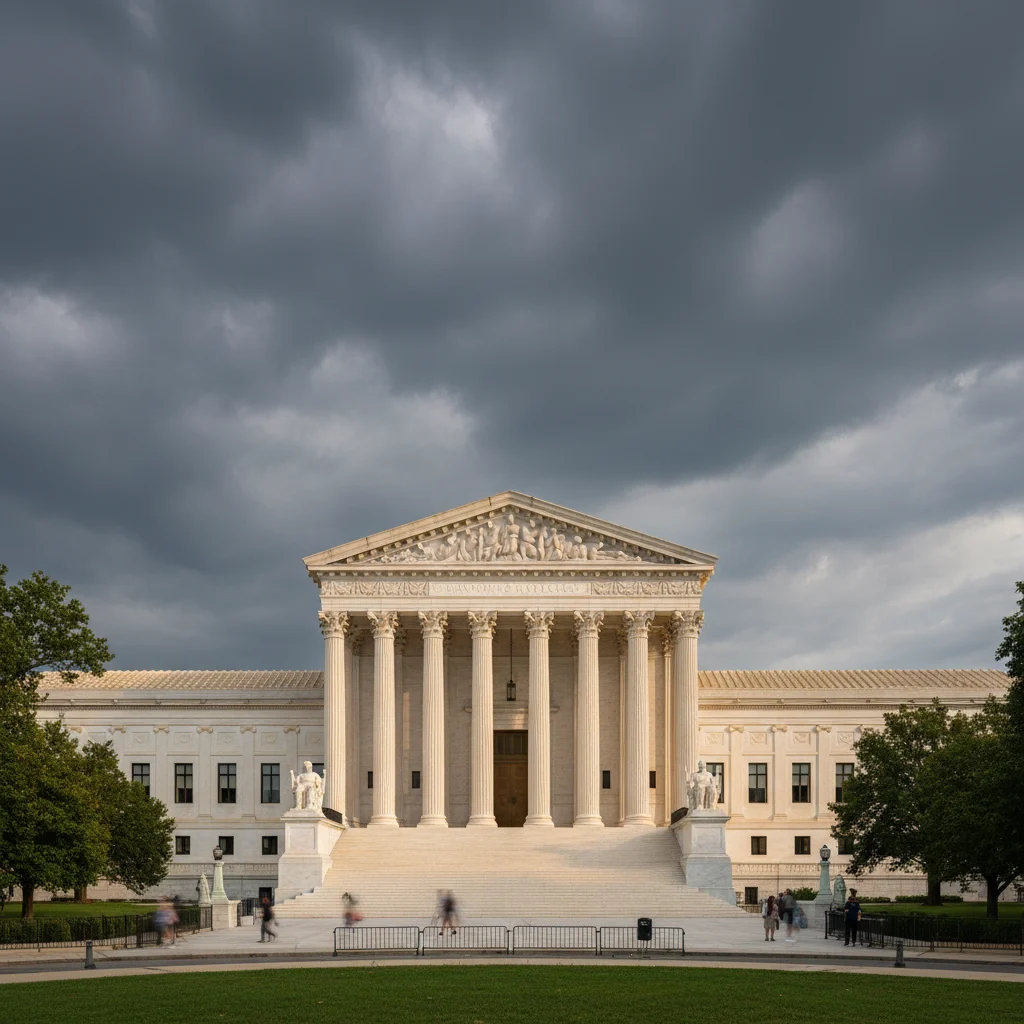
The United States Supreme Court has agreed to step into a high-stakes constitutional dispute that threatens to disrupt parts of a massive $1.7 trillion federal spending package. At the center of the fight is a fundamental question of how Congress conducts its business: Can the House of Representatives constitutionally pass laws when most of its members are not physically present in the chamber?
Thank you for reading this post, don't forget to subscribe!Texas is leading the charge to invalidate provisions of the Consolidated Appropriations Act of 2023. The state argues that the massive spending bill, signed into law by President Joe Biden, is unconstitutional because the House used pandemic-era proxy voting to establish a quorum. According to Texas Attorney General Ken Paxton, the Constitution requires lawmakers to be physically on the floor to do business. If the Supreme Court agrees, the ruling could reshape how Congress operates and throw numerous federal programs into legal limbo.
A Constitutional Clash Over Empty Seats
The legal battle stems from a chilly day in late December 2022. With a major winter storm looming and the Christmas holidays just days away, the House scrambled to pass the giant omnibus spending package. To avoid a government shutdown, leaders pushed the bill through. But the chamber was largely empty.
Of the 435 members of the House, fewer than half were physically present in Washington to cast their votes. Instead, 226 lawmakers chose to vote by proxy. They took advantage of a rule introduced in 2020 by then-Speaker Nancy Pelosi to allow remote voting during the height of the COVID-19 pandemic. By using these proxy votes, the House claimed it had the majority needed to do business.
Texas officials quickly filed suit, pointing directly to the Quorum Clause in Article I of the Constitution. That clause states that “a Majority of each [House] shall constitute a Quorum to do Business.” Texas argues that “presence” has always meant physical presence. For more than two centuries, lawmakers had to show up to count. By allowing hundreds of members to vote from their living rooms or vacation spots, Texas claims, the House lacked a constitutional quorum to pass the $1.7 trillion bill.
The Origin of the Proxy Fight
Proxy voting was a dramatic departure from congressional tradition. When the pandemic hit in early 2020, regular operations became a public health hazard. In response, the House authorized members to designate colleagues to cast votes on their behalf. The Senate, notably, did not adopt a similar rule.
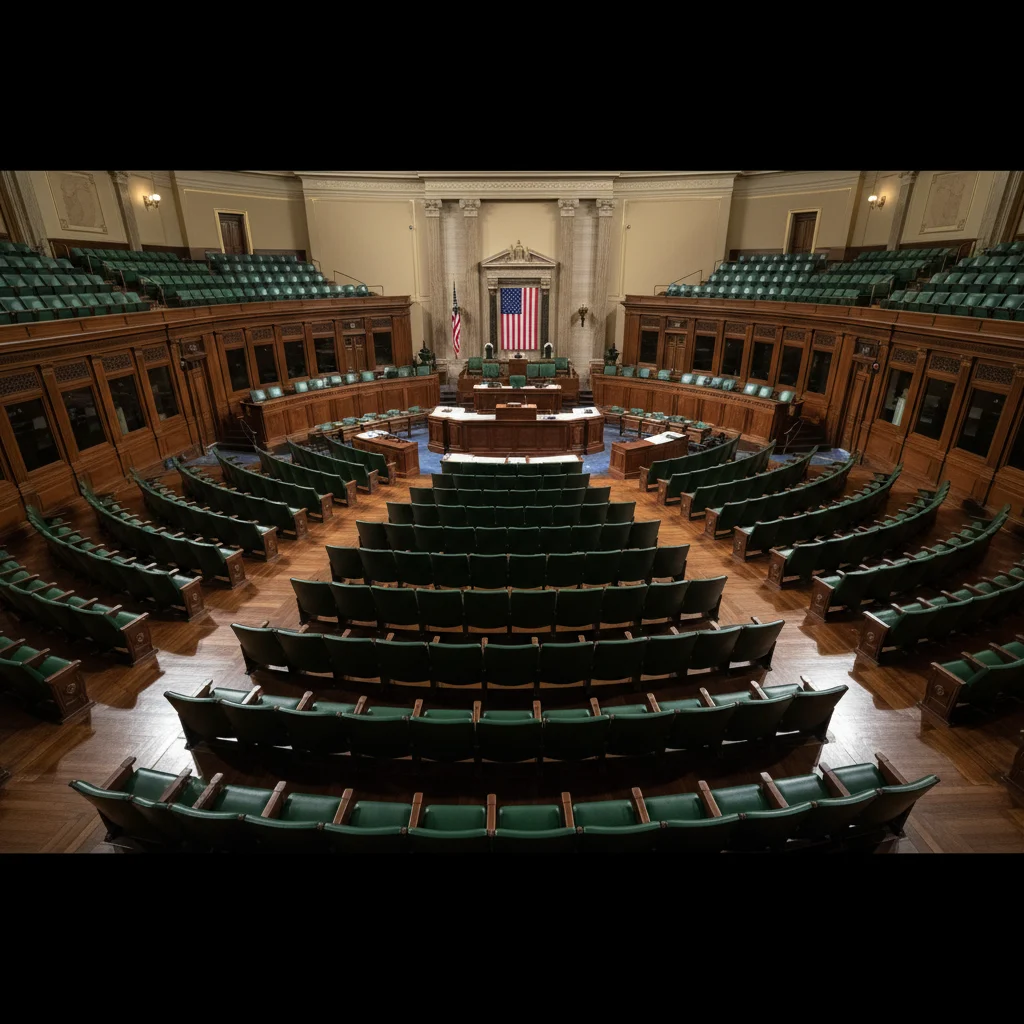
While Democrats championed the system as a necessary safety measure, many Republicans protested. They argued it eroded the deliberative nature of Congress. When Republicans took control of the House in January 2023, one of their first actions under Speaker Kevin McCarthy was to eliminate proxy voting entirely. However, the legislation passed under the old rules remained on the books, leaving a massive target for conservative legal challenges.
Texas Wins an Early Round in Lubbock
The state’s lawsuit found a receptive ear in the lower courts. In February 2024, U.S. District Judge James Wesley Hendrix of Lubbock, Texas, ruled in favor of the state. Hendrix, an appointee of former President Donald Trump, concluded that the Constitution’s text and historical practice clearly require physical presence to form a quorum.
“The Quorum Clause requires physical presence,” Hendrix wrote in his decision. He noted that for over 230 years, Congress understood that members must be physically present to vote. The sudden shift in 2020, he ruled, was an unconstitutional shortcut.
However, Hendrix did not strike down the entire $1.7 trillion spending package. Doing so would have triggered immediate financial chaos across the federal government. Instead, he targeted specific provisions that directly impacted Texas state operations. Most notably, he blocked the federal government from enforcing the Pregnant Workers Fairness Act against Texas state agencies. He also put a hold on a $20 million program aimed at helping migrants, arguing that these specific measures could not be enforced against the state because the underlying bill was improperly passed.
GET FREE $1000 AMAZON GIFT CARD
The Administration’s Shield: Congressional Autonomy
The Biden administration quickly appealed the ruling, defending the validity of the law and the autonomy of Congress. Justice Department attorneys argue that the courts have no business policing the internal rules of the House or Senate.
The administration points to the Rulemaking Clause of the Constitution, which gives each chamber the power to “determine the Rules of its Proceedings.” According to the government’s lawyers, this clause gives the House sole authority to decide how it counts its members and collects votes. They argue that if the judiciary begins micromanaging how Congress votes, it would violate the separation of powers.

Furthermore, the government claims Texas lacks the legal standing to sue in the first place. To bring a lawsuit, a plaintiff must show they suffered a concrete, traceable injury. The Justice Department argues that Texas has not shown any real harm from the spending bill or its provisions, and is simply using a procedural technicality to pursue a political disagreement.
What Happens If the Law Unravels?
If the Supreme Court sides with Texas, the fallout could be widespread and unpredictable. While the current lawsuit focuses heavily on specific provisions like the Pregnant Workers Fairness Act, a broad ruling on the Quorum Clause could invite challenges to dozens of other laws passed during the pandemic era.
Between 2020 and late 2022, Congress passed several major pieces of legislation where proxy votes played a key role in maintaining a quorum. A ruling that invalidates proxy-voted laws could spark a wave of litigation from businesses, individuals, and states looking to escape federal regulations or claw back funding. Legal experts warn it could create administrative gridlock, forcing Congress to scramble to re-pass older legislation to prevent a regulatory vacuum.
The high court’s decision to review the case shows that the justices are eager to resolve this fundamental constitutional question. It also puts the spotlight back on the tense relationship between the federal government and Texas, which has repeatedly challenged the Biden administration on immigration, healthcare, and federal spending.
A High-Stakes Legal Precedent
For the Supreme Court, the case presents a delicate balancing act. On one hand, the conservative majority has shown a strong preference for originalist interpretations of the Constitution, which favor the traditional, physical definition of a quorum. On the other hand, the court is often wary of disrupting the practical operations of government or overriding the internal decisions of a co-equal branch of government.
The justices will have to weigh the literal text of the Constitution against the unprecedented challenges of a global pandemic that forced almost every institution to adapt. Arguments are expected to be scheduled in the coming months, with a final decision likely by the summer of 2025.
Whatever the outcome, the ruling will set a powerful precedent. It will define the limits of congressional emergency powers and decide whether a law signed by the president, funded by taxpayers, and implemented across the nation can be dismantled because of empty seats in the House chamber.
