
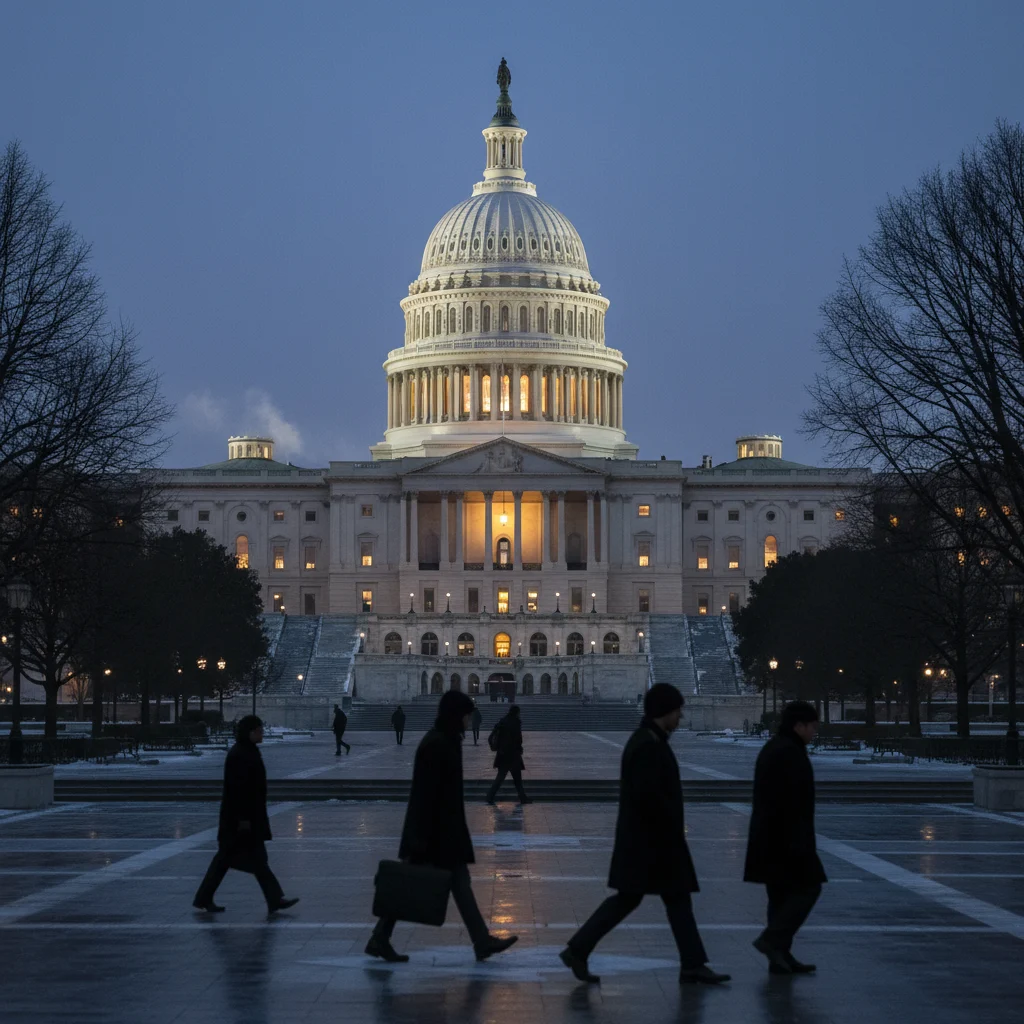
The corridors of the Capitol are usually quiet in the final weeks of the year. Not this time. President Donald Trump has made it clear that his administration is not waiting for the new legislative session to begin in January to reshape American trade policy. Instead, a quiet but intense campaign is underway to push one of his most ambitious economic proposals through the lame-duck Congress: the Reciprocal Trade Act.
Thank you for reading this post, don't forget to subscribe!This bill would grant the executive branch sweeping power to match foreign tariffs dollar-for-dollar. It has been a cornerstone of Trump's economic platform for years. Now, with a narrow window of opportunity before a new Congress takes the oath of office, the White House is aiming for a swift, decisive victory during the legislative twilight zone of the lame-duck session.
The Lame-Duck Calculation
Why the rush? The explanation lies in simple political arithmetic. The post-midterm period is notoriously unpredictable, but for Trump's team, the current makeup of Congress represents a known quantity. They know who is in office right now. They know which favors can still be traded, and which retiring lawmakers might be open to a deal. Once January arrives, the political map changes. New lawmakers bring new priorities, and the chore of organizing committees can stall complex legislation for months.
Trump wants this settled before the new year. According to sources familiar with the strategy, the administration sees the next few weeks as a rare moment of leverage. The goal is to avoid the bureaucratic swamp of a fresh legislative session where new alliances must be forged from scratch.
The Mirror-Image Mechanism
At its core, the proposed legislation is simple. It operates on a mirror-image principle. If a foreign nation imposes a 15% tariff on American-made machinery, and the current US tariff on that same item is only 2%, the President would have the authority to unilaterally raise the US tariff to 15%.
To supporters, this is the ultimate tool of fairness. They argue it levels a global playing field that has been tilted against American manufacturers for decades. Proponents frequently point to the automotive sector, where US cars face steep duties in Europe and Asia, while foreign vehicles enter the domestic market with minimal hurdles.
But critics see a dangerous shift in constitutional power. For over two centuries, Article I, Section 8 of the US Constitution has given Congress the sole power to regulate commerce with foreign nations and set tariffs. Ceding this authority to the Oval Office is a bridge too far for many, including some traditional conservative lawmakers who favor a strict separation of powers.
Lighthizer's Quiet Diplomacy
The intellectual force behind this push is Robert Lighthizer, Trump's trusted trade adviser. Lighthizer has been pacing the halls of the House and Senate, carrying binders packed with trade data. His mission is to convince skeptical Republicans that tariffs are not a tax on consumers, but a vital tool of international negotiation.
GET FREE $1000 AMAZON GIFT CARD

Lighthizer's pitch is practical. He argues that the mere threat of reciprocal tariffs will force other countries to lower their trade barriers. He believes that if other nations know the US can match their duties instantly, they will think twice before locking American goods out of their markets. Behind closed doors, Lighthizer has been targeting lawmakers from manufacturing states, framing the bill as a shield for local factories.
The Pushback from K Street and the Farm Belt
The administration's plan faces fierce resistance. A powerful coalition of business groups, retail associations, and agricultural lobbies has mobilized to block the bill. The National Retail Federation has warned that a sudden spike in tariffs could lead to higher prices for everyday consumer goods, from footwear to electronics, right as families feel the pinch of holiday spending.
Farmers are particularly worried. In states like Iowa, Nebraska, and Illinois, agricultural exporters remember the painful retaliatory tariffs of previous trade disputes. If the US raises tariffs on European or Asian imports, those nations will likely hit back by targeting American agricultural staples like soybeans, pork, and dairy.
A spokesperson for a major Midwestern agricultural cooperative expressed deep concern over the timing. They noted that a trade war right now could devastate farm incomes that are already stretched thin by falling commodity prices.
The Battle for Votes
To get the bill through, the administration must hold its party line while winning over moderate Democrats in Rust Belt states where manufacturing jobs have vanished over the last few decades. The strategy relies on framing the bill as a defense of working-class jobs rather than a partisan victory.
In the Senate, the task is formidable. The 60-vote threshold to overcome a filibuster looms large. White House emissaries are focusing their efforts on senators from states with heavy manufacturing bases, such as Ohio, Pennsylvania, and West Virginia. They are asking lawmakers a simple question: Do you stand with local factories or foreign competitors?
If the lame-duck push fails, the administration's backup plan is to rely on existing executive tools, such as Section 301 of the Trade Act of 1974. However, these tools are vulnerable to legal challenges and can be reversed by future administrations. A law passed by Congress would be much harder to dismantle.
The clock is ticking. With the holidays approaching and the January deadline looming, the next few weeks will decide whether Trump can secure his most coveted economic weapon or if he will have to start the fight all over again in the new year.
