
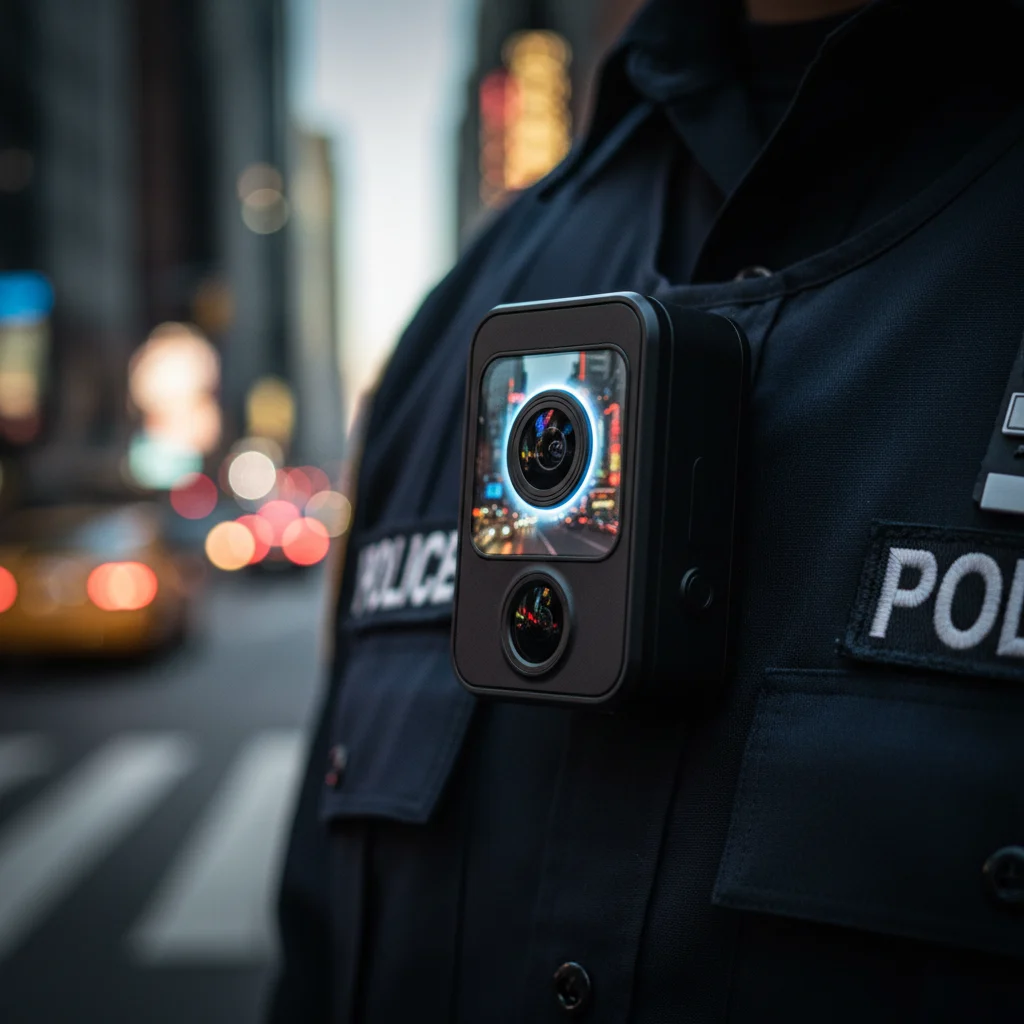
New York City is about to turn its police officers into walking translation hubs. By late 2026, the New York City Police Department plans to deploy a new fleet of body-worn cameras equipped with artificial intelligence capable of translating foreign languages in real time. The goal seems simple enough: bridge the gap between English-speaking officers and the millions of New Yorkers who speak other tongues. But the plan has triggered an immediate and fierce backlash from civil rights advocates, community leaders, and privacy watchdogs who fear the technology will morph into a permanent surveillance dragnet.
Thank you for reading this post, don't forget to subscribe!The department plans to spend an estimated $35 million over the next five years to upgrade its existing hardware. Under the new program, the AI-integrated cameras will capture spoken foreign languages and instantly translate them into English, sending text transcripts directly to an officer’s smartphone or a specialized earpiece. It works the other way, too, letting officers speak English and broadcast translated audio back to the civilian.
Proponents say the tech is overdue. New York is a city of immigrants, a sprawling metropolis where over 200 languages are spoken daily. Nearly a quarter of the population has limited English proficiency. In high-stakes emergency situations, waiting for a human interpreter can take precious minutes. Sometimes, those minutes are the difference between life and death.
The Promise of Real-Time Translation
The NYPD is framing the upgrade as a major step forward for community relations. Deputy Commissioner of Information Technology Ruben Beltran defended the initiative during a recent city council briefing, pointing to the friction that often arises during routine calls.
“We are trying to solve a fundamental policing problem,” Beltran said. “When an officer responds to a domestic dispute or a medical crisis and cannot understand the victims, the situation can escalate quickly. This technology allows us to communicate instantly, build trust on the spot, and get people the help they need without delay.”
The department plans to partner with Axon Enterprise, the leading supplier of police body cameras in the United States. According to preliminary technical documents, the AI system will initially support 45 languages, including Spanish, Mandarin, Cantonese, Arabic, Bengali, and Haitian Creole. The translation models will run on secure cloud servers, processing audio feeds in near-real time with a targeted latency of less than two seconds.
For officers on the beat, the operational benefits seem obvious. Patrol officers often rely on bilingual bystanders or family members—sometimes even young children—to translate during sensitive investigations. Police officials argue that utilizing an objective, machine-based translator will preserve privacy for victims and ensure more accurate initial reports.
Civil Rights Groups Sound the Alarm
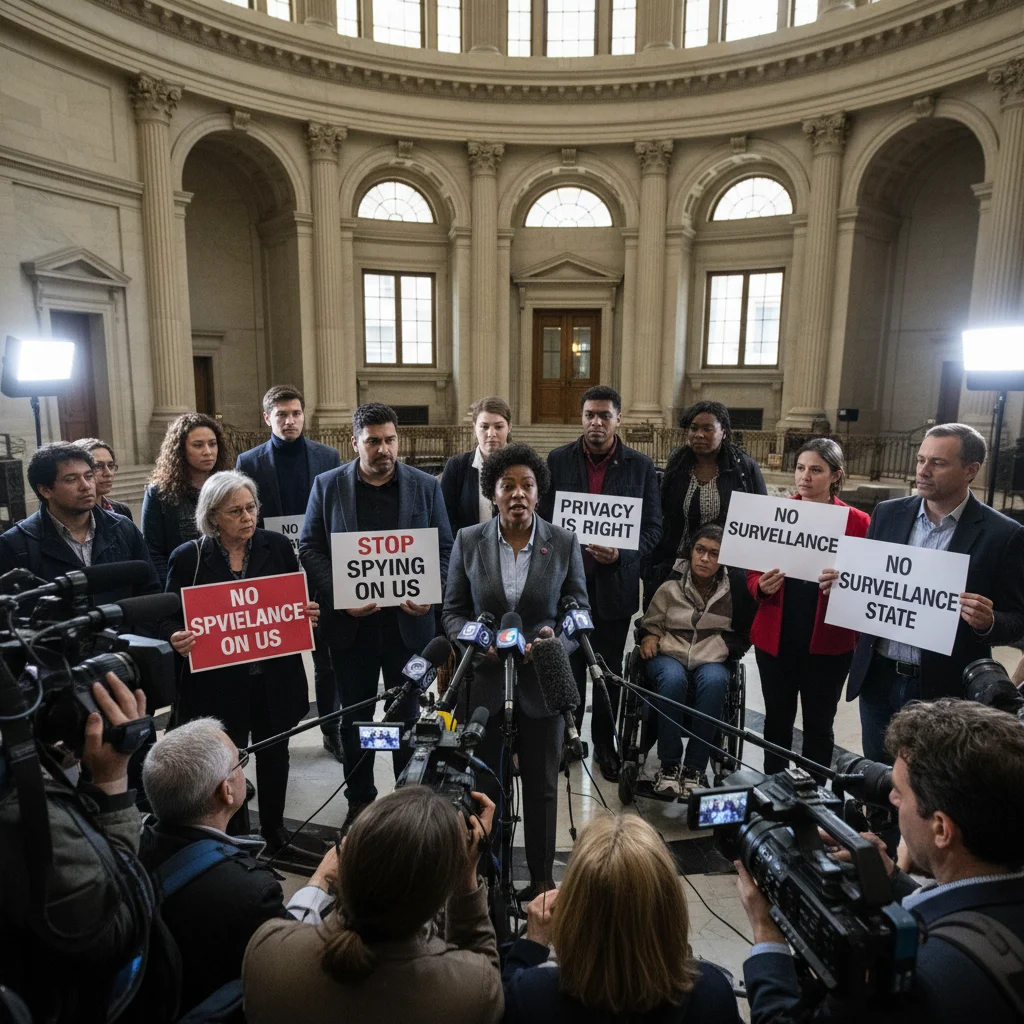
Not everyone is convinced by the promise of technological convenience. A coalition of civil rights organizations, led by the Surveillance Technology Oversight Project (S.T.O.P.) and the New York Civil Liberties Union (NYCLU), has launched a campaign to halt the rollout. Their concerns are twofold: the technical unreliability of AI translation and the massive privacy implications of continuous audio analysis.
Albert Fox Cahn, the executive director of S.T.O.P., warns that the program is a Trojan horse for wider biometric surveillance. He argues that once the software is active, there is little to stop the NYPD from using the audio to build a massive database of voice prints.
“This is a massive surveillance dragnet disguised as a public service,” Cahn said. “We are talking about a system that will constantly listen to, analyze, and store the voices of thousands of New Yorkers every single day. Where does that data go? Who owns it? How long is it kept? The NYPD has a long history of adopting powerful surveillance tools without public consent or meaningful oversight, and this is no different.”
GET FREE $1000 AMAZON GIFT CARD
The Vulnerability of Data Storage
At the heart of the opposition is the question of data retention. Under current NYPD policy, body camera footage is stored on Evidence.com, a cloud-based platform managed by Axon. Civil rights lawyers are deeply concerned that these audio recordings, along with their text transcriptions, will be used to train proprietary AI models or shared with federal agencies, including Immigration and Customs Enforcement (ICE).
The NYPD insists that strict data-sharing protocols will be established before the official launch in November 2026. However, critics point out that existing guidelines are frequently bypassed or loosely enforced. The fear is “function creep”—the gradual widening of the use of technology beyond its original purpose. What starts as a translation aid could easily become a tool for automated keyword alerts, scanning street conversations for specific slang, political slogans, or names.

The High Cost of Machine Error
Beyond the privacy debate lies a more immediate, physical danger: AI translation is notoriously imperfect. While translation apps work well enough for tourists finding a subway station, they often stumble when confronted with regional dialects, street slang, stress-induced speech patterns, or heavy background noise.
In a tense police encounter, a single mistranslated word can have catastrophic consequences. Jerome Greco, the digital forensics director at the Legal Aid Society, believes relying on AI in these moments is a recipe for disaster.
“A mistranslation isn’t just a typo when you’re facing a police officer with a gun,” Greco said. “It’s a matter of life and death. If the AI misinterprets a cultural idiom as a threat, or translates a plea for help as an admission of guilt, people will go to jail—or worse. The technology simply isn’t ready for high-stress, low-context environments like active police scenes.”
Academic research backs up some of these fears. Numerous studies have shown that automated speech recognition and translation software perform significantly worse when analyzing the voices of non-native speakers, people of color, and individuals from low-income backgrounds. The system’s errors are not distributed evenly; they disproportionately impact the very communities the NYPD claims it wants to help.
The Fight for Oversight and Transparency
Opponents of the rollout are pinning their hopes on legislative intervention. Under New York City’s Public Oversight of Surveillance Technology (POST) Act, the NYPD is legally required to publish impact and use policies for any new surveillance tools before they are deployed. This process forces a period of public comment and city council review.
Advocates are already organizing to pack public hearings and pressure city council members to block funding for the upgrade. They are demanding several strict concessions if the program cannot be stopped entirely:- An absolute ban on using body-worn camera audio to train private AI databases.
- Immediate deletion of translation transcripts for any encounter that does not lead to an arrest or active investigation.
- A legally binding guarantee that translation data will never be shared with federal immigration authorities.
- Mandatory, independent auditing of the AI’s translation accuracy across different dialects and demographics.
The NYPD, meanwhile, is moving forward with its timeline. The department plans to launch a limited pilot program in select precincts in early 2026 to test the hardware and gather initial feedback from officers and community advisory boards. Officials hope that a successful trial will ease public anxieties and prove that the benefits outweigh the risks.
As the late 2026 deadline approaches, New York finds itself at a familiar crossroads. The city must decide where to draw the line between high-tech efficiency and fundamental civil liberties. In a town where language is both a bridge and a barrier, the fight over how police listen to the streets is only just beginning.
