
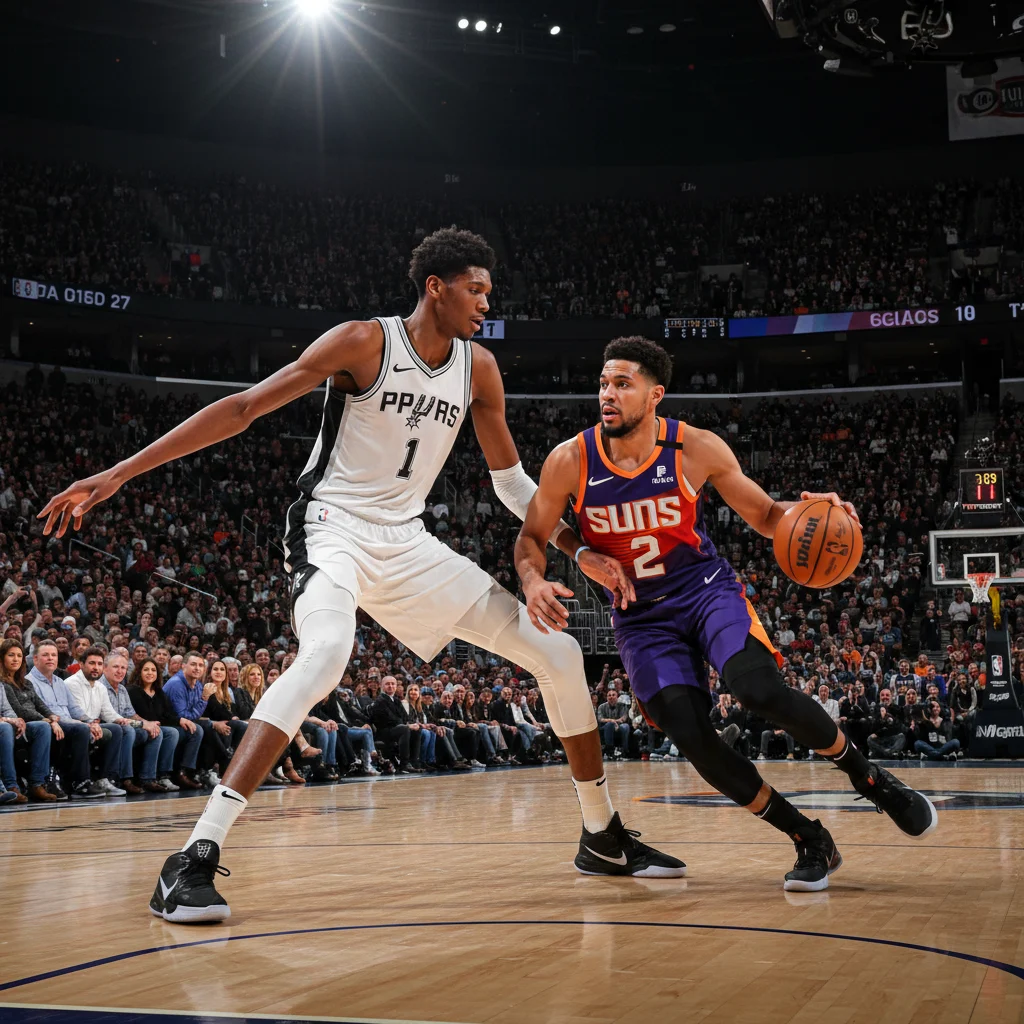
The physical reality of Victor Wembanyama is something you have to experience live to truly understand. On television, his eight-foot wingspan looks like a camera trick. On the court, it functions as a psychological barrier that alters how the world’s best scorers think. Just ask Devin Booker.
Thank you for reading this post, don't forget to subscribe!In a thrilling early-season showdown at the Frost Bank Center, the San Antonio Spurs edged out the Phoenix Suns 112-110. While the scoreboard showed a tight game, the real story unfolded in the final six minutes. That was when Spurs head coach Gregg Popovich put his young French prodigy directly in the path of one of the NBA’s most lethal midrange assassins. The result was a defensive masterclass that will be studied in film rooms for the rest of the season.
The Final Sequence: A Study in Spatial Dominance
With San Antonio clinging to a two-point lead with less than thirty seconds on the clock, Phoenix had the ball. Everyone in the arena knew where it was going. Booker, who had already poured in 28 points, isolated at the top of the key. He initiated a high screen-and-roll, hoping to force a switch. He got exactly what he wanted: Wembanyama on an island.
Booker is a master of leverage. He loves to bump defenders, create a pocket of space, and rise up for his signature high-release jumper. He tried it here. He drove hard to his right, hit Wembanyama with a heavy shoulder to the chest, and stepped back behind the arc. Under normal circumstances, against any other defender in league history, that bump creates two feet of separation. It is an automatic bucket.
But Wembanyama did not yield. He absorbed the contact, recovered instantly, and simply stood his ground. He did not even jump. He just reached out his right arm. Booker, realizing his vision of the rim was completely obscured by a wall of limbs, was forced to pump-fake. He tried to pivot, but Wembanyama’s shadow stayed over him. Booker had to pass out to a heavily covered Grayson Allen, whose desperate heave at the buzzer missed everything.
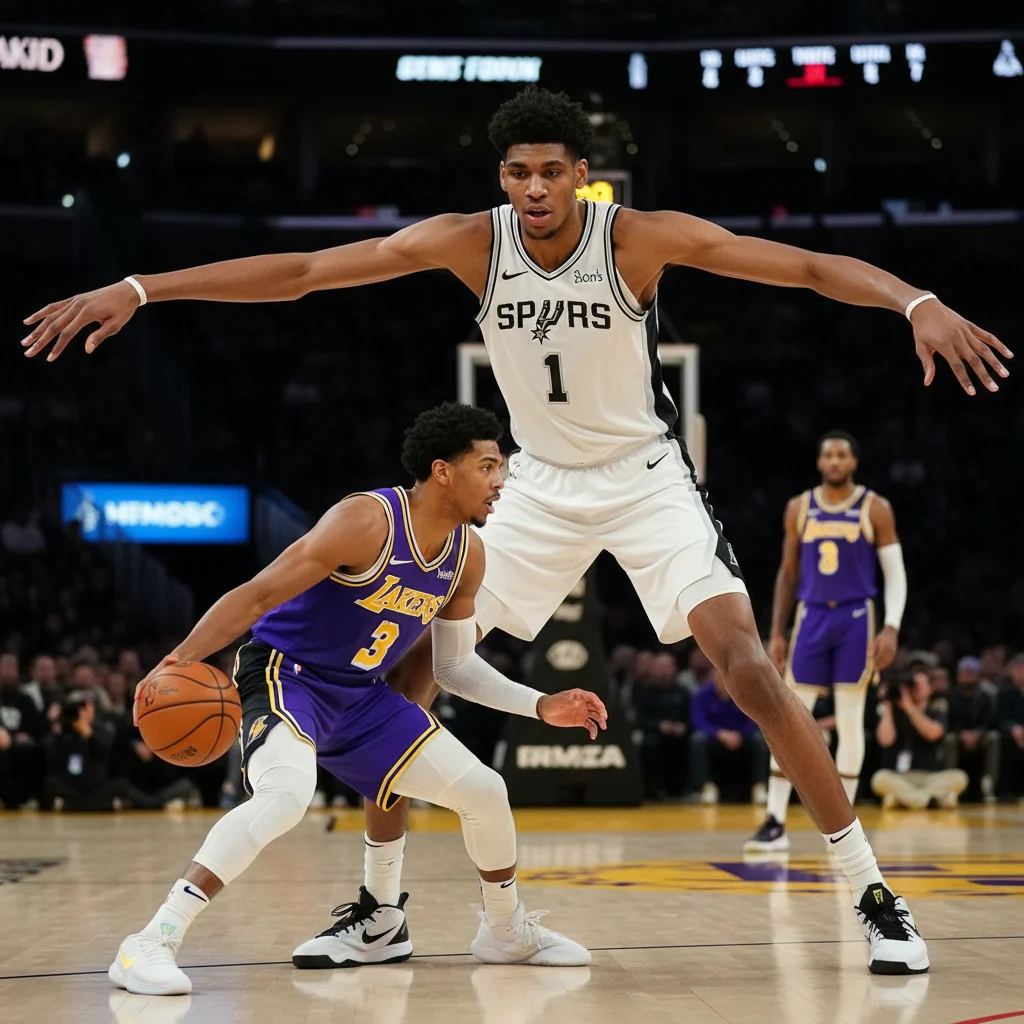
“You think you have an angle,“ Booker remarked in the locker room after the game. “Against anyone else, that’s an open look. With him, you have to recalculate your entire approach in mid-air. He recovers faster than anyone I’ve ever seen.”
By the Numbers: The Gravity of the Wemby Effect
The raw box score tells part of the story: Wembanyama finished with 26 points, 12 rebounds, and 6 blocks. But the tracking data reveals the true extent of his defensive impact. When Booker drove into the paint with Wembanyama acting as the primary rim protector, the Suns shot just 2-of-11. More telling was the number of times Phoenix players drove into the lane, saw the rookie waiting, and simply dribbled back out to the perimeter. This is what coaches call “defensive gravity.”
In the third quarter alone, Booker aborted three different drives that would normally result in a floater or a kick-out pass. The mere presence of Wembanyama altered the Suns’ offensive geometry. Phoenix, usually a team that thrives on paint-to-perimeter ball movement, found themselves settled for contested, late-clock perimeter shots.
Spurs guard Jeremy Sochan, who spent most of the night fighting through screens to harass Booker, praised his teammate’s safety-net presence. “It makes our job on the perimeter so much easier,“ Sochan said. “We can play physical, we can deny the ball, and we can take risks. If we get beat, we know we have a giant behind us who can erase any mistake. It gives the whole defense a different level of confidence.”
How Popovich Weaponized the Zone
Popovich has never been a coach to rely on gimmicks, but Wembanyama’s unique skill set has forced him to adapt his defensive playbook. Throughout the second half, the Spurs showed Booker a variety of coverages. They started in a standard drop, but quickly transitioned into a hybrid zone that allowed Wembanyama to roam the baseline like an elite free safety in football.
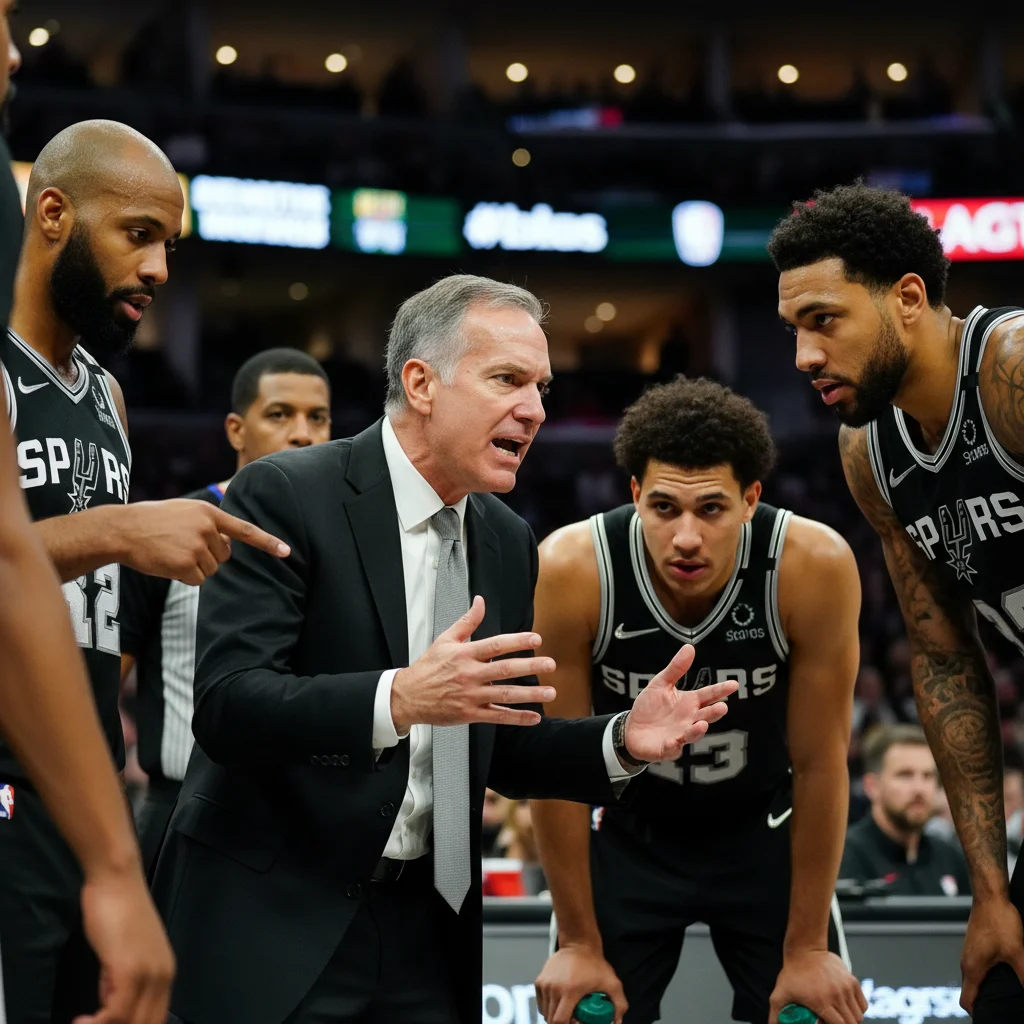
This tactical tweak completely disrupted Booker’s rhythm. He could no longer rely on reading the primary defender on the screen. He had to keep track of where Wembanyama was hiding in the weak-side corner. Whenever Booker attempted to use his deadly pull-up game in the middle of the floor, Wembanyama would flash toward the paint, offering a late contest that threw off Booker’s release timing.
“He has instincts you can’t teach,“ Popovich said during his post-game press conference. “We talk about positioning and angles, but at the end of the day, he just understands the game. He knows when to help and when to stay home. He’s learning the tendencies of these elite scorers very quickly.”
A Paradigm Shift in Western Conference Defense
This early-season battle was more than just a regular-season win for a young San Antonio squad. It was a statement of intent. For years, the Western Conference has been dominated by elite perimeter scorers like Booker, Steph Curry, and Luka Doncic. The blueprint to stop them usually involved throwing multiple defenders at them and hoping they missed. Wembanyama offers a different solution: a single defender who can guard the perimeter and protect the rim simultaneously.
The Suns tried to play physical with him. Jusuf Nurkic set hard, bruising screens to try and free Booker, but Wembanyama simply slithered around them. His lateral quickness is unprecedented for a player of his size, allowing him to stay in front of guards without fouling.
As the season progresses, teams will undoubtedly find new ways to test Wembanyama. They will try to pull him further away from the basket or use his aggressiveness against him with pump fakes and pass fakes. But on this night, against one of the smartest offensive players in the world, Wembanyama showed that his defensive ceiling is unlike anything the league has seen before. The Spurs are building something terrifying in Texas, and it starts on the defensive end.
